To open a restaurant in New Jersey you need a municipal Certificate of Occupancy, a local Board of Health food establishment permit, NJ Division of Taxation sales tax registration, and a food manager certification. Optional licenses include a liquor license if applicable. The full process typically takes 6 to 12 months depending on municipality, buildout scope, and inspection scheduling. At 101 Chicken, we have navigated this timeline across multiple New Jersey municipalities and found that proactive communication with local inspectors and early architectural compliance with N.J.A.C. 8:24 shaves weeks off the schedule.
What Licenses and Permits Are Required to Open a Restaurant in New Jersey?
New Jersey does not issue a single universal restaurant license. That point cannot be overstated. Instead, every operator must assemble permits across multiple state agencies and their municipality. Requirements shift based on town, premises, menu, seating capacity, planned renovations, and alcohol service. A concept that clears permitting in one Bergen County town may face a use variance in the next town over. Understanding which agencies govern which requirements is the first real job of any prospective restaurateur in this state.
At the state level, the NJ Department of Health publishes the State Sanitary Code (N.J.A.C. 8:24), which sets minimum food safety standards for all retail food establishments regardless of municipality. The NJ Division of Taxation requires sales tax registration via Form NJ-REG. File at least 15 business days before you begin operations or open an additional location. Prepared food sold for immediate consumption is taxable at the statewide rate of 6.625% (trykintsugi.com). A Federal Employer Identification Number from the IRS is a prerequisite to hiring staff or opening a business bank account, and it can typically be obtained the same day to within a week of application.
State-Level Requirements: NJ Department of Health and NJ Division of Taxation
The State Sanitary Code (N.J.A.C. 8:24) is foundational. Every kitchen designer and operator must read it before finalizing a floor plan. It governs food storage temperatures, cross-contamination prevention, handwashing station placement, ventilation requirements, and sanitation protocols. Compliance with this code is not negotiable, and your Board of Health inspector will reference it line by line during plan review. The NJ Division of Taxation additionally requires a Certificate of Authority for sales tax collection. Restaurant meals consumed on-premises are taxable at 6.625% (wiss.com). Get the NJ-REG filed early, the 15-business-day minimum lead time before operations means a late filing can delay your opening without any permit actually being denied.
Municipal Requirements: Local Board of Health and Certificate of Occupancy
The Certificate of Occupancy (CO) is your municipal construction authority's confirmation that the space is code-compliant for restaurant use. Interior renovation or change of use triggers a building permit. Construction, fire, and plumbing inspections must pass before the CO is issued. In Fort Lee and other dense Bergen County municipalities, inspection scheduling is competitive, plan for 2 to 6 weeks between requesting and completing each inspection round. New Jersey construction officials have up to 20 business days to act on a complete construction-permit application (abcontractingdesign.com), and revised plans typically receive a decision within 7 business days (abcontractingdesign.com). Once all requirements are satisfied, a Certificate of Occupancy may be issued within 10 business days of written application (abcontractingdesign.com). These are statutory windows, not guarantees, incomplete submissions reset the clock entirely.
What Is the Realistic Timeline to Open a Restaurant in New Jersey?
The honest answer for most concepts is 6 to 12 months from lease signing to opening day, with gut-renovation projects or complex liquor license scenarios pushing toward 12 to 18 months. Industry construction data supports a range of 6 to 10 months for most projects (bayarearealtyandconstruction.com), with tenant improvement work inside an existing shell achievable in 4 to 7 months nationally (fransconstruction.com). New Jersey has 564 independent zoning authorities. Each municipality has its own Board of Health and separate fire marshal inspections. This complexity adds friction at every phase. At 101 Chicken, our experience with the Fort Lee permitting environment confirms that timeline padding is not pessimism; it is operating discipline. We recommend applicants budget an additional 2 to 4 weeks for unexpected inspection scheduling delays, particularly in Bergen County municipalities where inspector availability is competitive.
Phase-by-Phase Timeline Breakdown
Breaking the process into phases makes the dependencies visible. Each phase has a predecessor, and a failure at any step cascades forward. The table below maps the standard sequence for a moderate tenant improvement buildout in a New Jersey municipality like Fort Lee.
| Phase | Typical Duration | Key Milestones |
|---|---|---|
| Site selection and lease negotiation | 1 to 3 months | Zoning confirmation, feasibility review |
| Entity formation and NJ-REG filing | 2 to 4 weeks | EIN, Certificate of Formation, sales tax registration |
| Architectural design and kitchen layout | 3 to 6 weeks (bayarearealtyandconstruction.com) | N.J.A.C. 8:24-compliant drawings |
| Building and fire permit review | 4 to 10 weeks (bayarearealtyandconstruction.com) | Complete application required |
| Construction and equipment installation | 8 to 16 weeks (bayarearealtyandconstruction.com) | Hood and walk-in: 8 to 14 week lead times |
| Board of Health plan review and inspection | 2 to 6 weeks | Pre-opening REHS inspection |
| Fire marshal and CO inspection | 2 to 4 weeks | CO issued within 10 business days of complete application |
| Operational setup (POS, staffing, suppliers) | 4 to 8 weeks | Soft-open period recommended |
| Liquor license (if applicable, parallel track) | Often 2 to 6 months or longer | Start at lease signing |
Plan on roughly 6 to 12 months overall for a typical restaurant, including site selection, financing, design, construction, inspections, and licensing (openingdaykit.com). A straightforward interior buildout in NJ might get permitted in 3 weeks; a new commercial building on a previously undeveloped site can take 6 months or more for permits alone (redcomllc.com).
What Causes the Most Delays in New Jersey Restaurant Openings?
Incomplete architectural drawings are the single most preventable cause of delay. When a plan review submission is missing equipment specifications, ventilation calculations, or handwashing station locations required under N.J.A.C. 8:24, the Board of Health rejects it and the clock resets. A zoning variance or conditional-use approval, when required, can add months independently of the construction timeline, the municipal governing body schedules hearings on its own calendar, not yours. Contractor labor shortages in northern NJ, particularly for commercial kitchen hood and fire suppression installations, are a persistent bottleneck. Long-lead equipment is a compounding problem: hoods and walk-in coolers carry 8 to 14 week lead times (bayarearealtyandconstruction.com), and construction cannot close out without them. Change-of-use buildings, converting retail to food service, routinely surface fire code upgrade requirements that were not in the original project scope. Failed pre-opening health inspections due to equipment placement errors require rescheduling, which in busy Bergen County municipalities can cost 2 to 4 additional weeks.
How Much Does It Cost to Open a Restaurant in New Jersey?
Cost transparency is rare in this category. Here is what we know from verified data and direct experience operating in Fort Lee. Quick-service concepts generally fall below full-service build costs, but northern NJ's construction labor market pushes every line item above national benchmarks. Investors should model conservatively and stress-test unit economics against NJ's minimum wage escalation schedule before committing capital.
How Does Kitchen Automation Affect Restaurant Startup and Operating Costs?
Robot-assisted kitchen equipment shifts costs from recurring labor expense to depreciable capital equipment, which has real accounting and tax implications. Our Fort Lee location on Lemoine Ave operates a robot-assisted kitchen as a live production environment, not a demo, not a pilot. NJ.com reported on this directly under the headline "A robot cooks your fried chicken at this inventive new NJ restaurant," and ABC7 New York covered it in 2024 as a working example of automation at the single-unit quick-service level. The NJ Board of Health applies the same N.J.A.C. 8:24 standards to automated equipment as to conventional kitchens: all food-contact surfaces must meet NSF/ANSI standards and be accessible for cleaning and inspection. Before purchasing automation equipment, request vendor case studies with verified throughput data. At 101 Chicken, we evaluated robot-assisted kitchen systems against our Fort Lee labor market rates and confirmed the payback period aligns with our ticket volume and local wage escalation trajectory. The capital outlay is real, and the ROI case depends on your ticket volume and local labor cost, both of which vary significantly within New Jersey.
Sales tax on prepared food runs 6.625% statewide (commenda.io), and operators in Urban Enterprise Zones pay a reduced 3.3125% on qualifying in-person sales (trykintsugi.com), a material difference worth confirming with your accountant before choosing a site. If you are considering a Jersey City location, note that the city levies a 1% gross payroll tax on employers, with quarterly gross payroll below $2,500 exempt (businesslicenseguide.com).
Step-by-Step Process for Obtaining a New Jersey Food Establishment Permit
This process is more granular than most guides describe, and gaps in execution are what cause failed inspections and costly restarts. The food establishment permit is issued by your local Board of Health, not by the state, and each Board has its own submission portal, fee schedule, and inspector availability. In Bergen County, most municipalities maintain independent Boards of Health rather than deferring to county-level administration, so a Fort Lee applicant deals with Fort Lee's Board, not Bergen County's.
Step 1 is identifying the correct local Board of Health for your specific address. Do not assume county and municipal jurisdiction align. Step 2 is submitting a plan review application with architectural drawings that show kitchen layout, equipment placement, ventilation, plumbing, and handwashing station locations, all per N.J.A.C. 8:24. Step 3 involves receiving plan review comments and addressing deficiencies; this may require revised drawings and re-submission, which is why complete, code-compliant drawings from a qualified architect save weeks. Step 4 is completing construction and equipment installation per approved plans, deviating from approved plans during construction is a common cause of failed pre-opening inspection. Step 5 is scheduling and passing the pre-opening inspection conducted by a registered environmental health specialist (REHS). Step 6 is paying the annual food establishment permit fee and posting the permit conspicuously in the establishment. Step 7 requires ensuring at least one Certified Food Manager with an NJ-recognized certification (ServSafe or equivalent) is on-premises during operating hours. NJ.com covered the robot fry station when we opened in Fort Lee.
What Does the NJ Board of Health Inspect Before Issuing a Food Permit?
The pre-opening inspection is methodical and sequential. Inspectors verify food storage, preparation, and service areas against N.J.A.C. 8:24 temperature control and sanitation standards. Handwashing sinks must be dedicated, not shared with prep sinks, supplied with hot water, soap, and single-use towels, and positioned per code at every required location. Ventilation, grease trap installation, and hood fire suppression systems are verified against approved plans. Any deviation from the approved drawings triggers a re-inspection. Automated or robotic equipment must demonstrate cleanability and food safety equivalence to conventional equipment. Pest control protocols and waste management procedures are reviewed; most NJ Boards of Health expect a written pest control agreement with a licensed NJ pest control operator before issuing the permit. Violations are graded and publicly posted in many NJ jurisdictions, so a failed pre-opening inspection is not just a delay, it is a public record. The full list of write-ups is on our press page.
What Prospective Restaurant Investors Should Know Before Choosing a Concept or Location in New Jersey
New Jersey's restaurant market is competitive by any measure. For example, a Korean fried chicken concept opening in Fort Lee benefits from the neighborhood's substantial Korean-American community and late-night weekend traffic from commuters and families seeking quick, flavorful meals without long waits. Consider how location within Bergen County's dense residential corridor near the George Washington Bridge corridor directly impacts both customer demand and permitting complexity, making site selection as critical as the licensing process itself. Bergen County, where Fort Lee sits at the George Washington Bridge corridor, benefits from proximity to New York City, dense residential neighborhoods, and a substantial Korean-American consumer base that drives sustained demand for Korean fried chicken and Korean-influenced quick-service concepts. We see this demand directly at our Lemoine Ave location, late-night weekend traffic from commuters, local families, and post-event crowds is a daypart that many suburban NJ markets simply cannot sustain.
Why Does Location Within New Jersey Significantly Affect Licensing Complexity?
New Jersey has 564 municipalities, each with independent zoning authority. A site zoned for restaurant use in one town may require a use variance in the adjacent town, and variance hearings run on the governing body's schedule, not the applicant's. Do not sign an unconditional lease until zoning compliance, health requirements, grease disposal capacity, ventilation feasibility, occupancy load, and liquor-license availability have all been confirmed in writing. We recommend engaging a local NJ land use attorney and scheduling a pre-lease Board of Health site visit to avoid discovering infrastructure conflicts after you have committed capital to the location. This is not conservative advice; it is the difference between a 6-month opening and an 18-month one. Liquor license quotas are set at one consumption license per 3,000 residents and one distribution license per 7,500 residents (startbusinessbystate.com), making licenses scarce and expensive in densely populated Bergen County towns. The Plenary Retail Consumption license (Type 33), which covers bar-and-restaurant on-premises service, carries a municipal fee of $250 to $2,500 per year (startbusinessbystate.com), but the municipal fee is only part of the cost. Secondary market license transfers in sought-after municipalities routinely trade at multiples that require their own due diligence. A 2024 reform revived roughly 1,300 dormant licenses, growing the state's active-license stock by about 15% (aarausa.com), which may improve availability in some markets, but Bergen County's dense competitive landscape means availability varies sharply by town. Investors evaluating franchise or independent concepts should retain a local NJ land use attorney early to identify zoning compliance, variance risk, and Board of Health jurisdiction before signing anything.
Frequently Asked Questions
How much does a food establishment permit cost in New Jersey?
Do I need a separate license for online ordering and delivery in NJ?
What is the NJ State Sanitary Code and how does it affect my kitchen design?
Can I open a restaurant in New Jersey without a liquor license?
How long does a New Jersey Board of Health plan review take?
What food manager certifications does New Jersey accept?
How does Bergen County's Board of Health differ from other NJ counties for restaurant permits?
What is the minimum wage for restaurant workers in New Jersey in 2026?
How do I contact 101 Chicken about franchise or investment opportunities?
What health permits are required to open a restaurant in New Jersey?
How do I apply for a New Jersey liquor license?
What are the typical fees for restaurant licenses in New Jersey?
How long does New Jersey health department approval usually take?
Do I need zoning approval or a certificate of occupancy in New Jersey?
Sources & References
- NJ Restaurant Build-Out Cost Guide | AB Contracting Design (opens in a new tab)[industry]
- New Jersey Sales Tax Rate, Rules & Filing (2026) (opens in a new tab)[industry]
- Is Grocery Taxable in New Jersey? | Commenda (opens in a new tab)[industry]
- NJ Sales Tax & World Cup 2026: Hospitality Guide - Wiss (opens in a new tab)[industry]
- Restaurant Construction Guide 2026 — Costs, Timeline, Process | BARC (opens in a new tab)[industry]
- New Jersey's 2026 Liquor-License Bills | Asian American Retailers Association (opens in a new tab)[org]
- New Jersey Liquor License: Cost & Requirements (2026) (opens in a new tab)[industry]
- How to Start a Food Truck in New Jersey (2026) (opens in a new tab)[industry]
- NJ Commercial Construction Permits Guide | REDCOM (opens in a new tab)[industry]
- Jersey City, NJ Business License Guide 2026 (opens in a new tab)[industry]
- Commercial Construction Timeline: 2026 Phase-by-Phase Guide (opens in a new tab)[industry]
- Opening Day Kit: How Long Does It Take to Open a Restaurant (opens in a new tab)[industry]
- nj.com (opens in a new tab)[industry]
About the Author
101 chicken
101 Chicken is Fort Lee's premier destination for fresh, expertly prepared chicken dishes, offering convenient dine-in and online ordering seven days a week with extended late-night weekend service.
Learn more at www.101chicken.com → (opens in a new tab)Related Posts
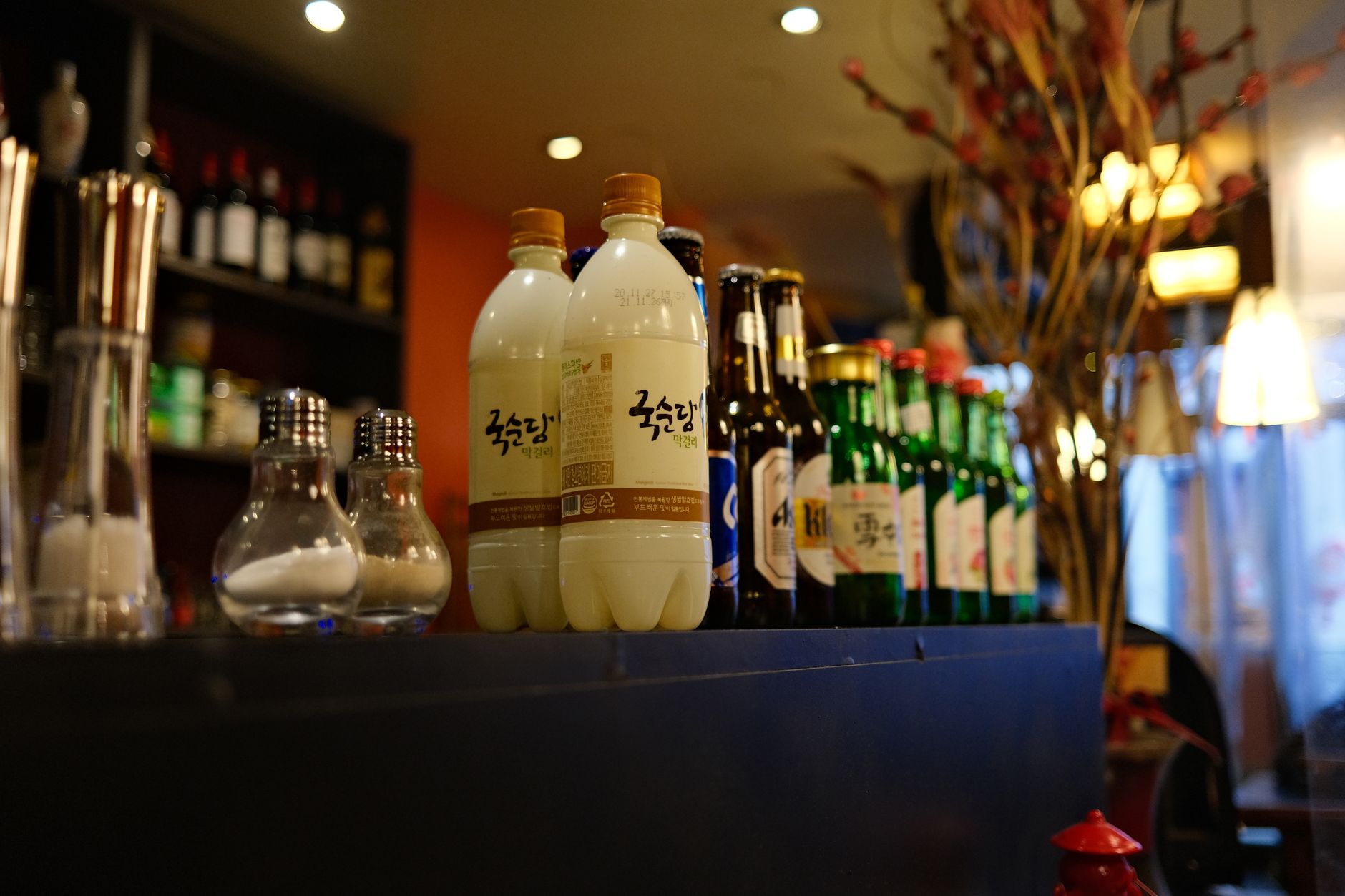
Korean Fried Chicken Chain vs. Independent: Which Should You Choose in Bergen County?
Trying Korean fried chicken for the first time and not sure whether to visit a chain or an independent spot in Bergen County? This guide breaks down the real differences in quality, consistency, hours, and overall experience so you can order with confidence.
11 min read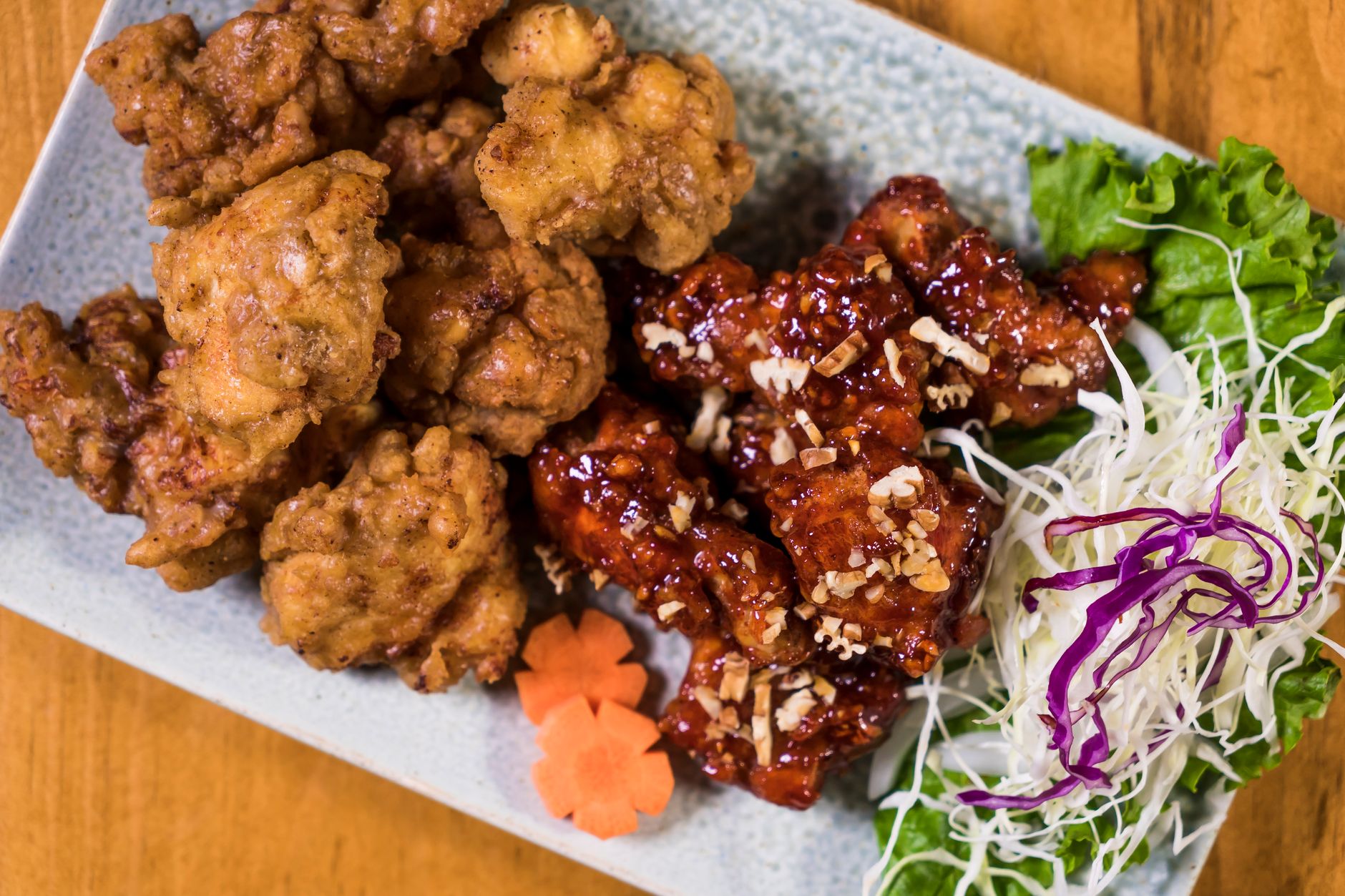
10 Sides That Actually Go With Korean Fried Chicken
Korean fried chicken is boldly seasoned, satisfyingly crispy, and unlike anything from a standard fast-food menu. The right sides make it a complete meal. This guide covers 10 sides that genuinely complement every style of Korean fried chicken, whether you're ordering soy-glazed, spicy, or original.
15 min read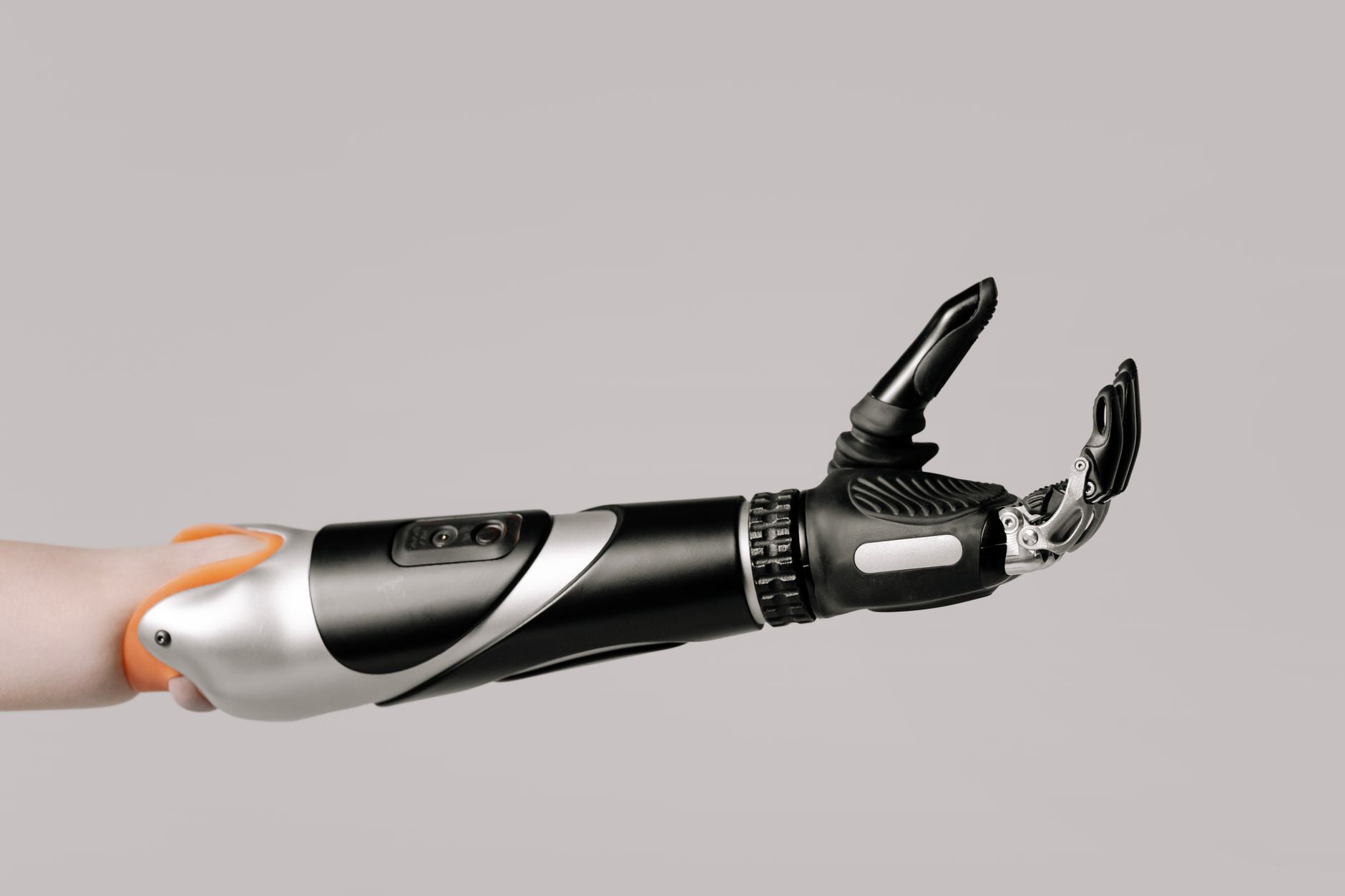
Is a Robot Kitchen Worth It? One Year of Operating Data from a Korean Fried Chicken Restaurant
Robot kitchens promise lower labor costs and faster throughput, but do the numbers hold up after 12 months of real-world operation? This post examines published industry benchmarks alongside operator observations from 101 Chicken's Fort Lee, NJ location, where a robot-assisted kitchen has been running through dine-in, pickup, and late-night weekend service. Prospective franchisees and restaurant investors will find a data-grounded ROI framework here.
12 min read