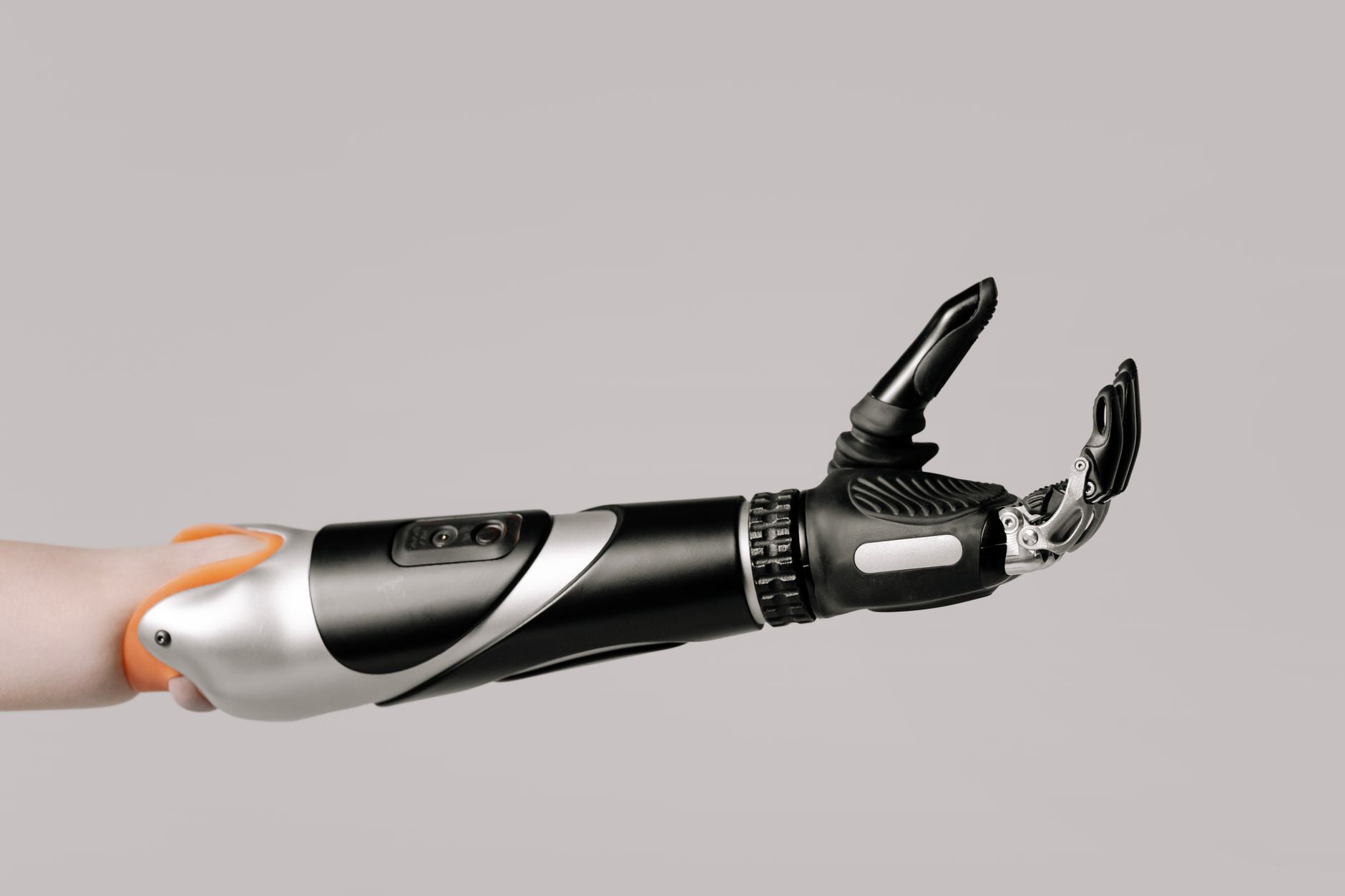
Is a Robot Kitchen Worth It? One Year of Operating Data from a Korean Fried Chicken Restaurant
A robot kitchen can be worth the investment when labor costs exceed 30% of revenue (terrapincg.com). Volume must be high enough to amortize the equipment premium within three to five years. Payback depends on throughput consistency, menu complexity, and local labor market rates.
What Does a Robot Kitchen Actually Cost to Install and Operate?
The price of automating a restaurant kitchen spans a wider range than most vendor brochures suggest. Costs vary significantly. Equipment acquisition is only the first line item. System integration, electrical upgrades, ventilation retrofits, software licensing, and staff retraining all follow. The total outlay in a high-cost market like Fort Lee, NJ consistently runs ahead of national benchmarks. QSR buildout costs nationally range from $100 to $800+ per square foot depending on concept, location, and build type (terrapincg.com), and urban coastal markets push those figures 20-30% above the national average (terrapincg.com). New York metro proximity compounds that premium further: restaurant buildout costs in the New York area run roughly 45% above the national average, translating to approximately $244 per square foot for a standard fit-out (buildoutiq.net). Fort Lee operators need to budget with that regional ceiling in mind before a single robotic component enters the picture.
Capital Expenditure: Equipment vs. Integration
The equipment sticker price is the most visible cost and frequently the most misleading one. Miso Robotics offers Flippy, its automated fry station, on a Robot-as-a-Service rental model priced at $5,400 per month with no upfront capital required (restauranttools.ai). That translates to an effective hourly cost of $7.25 to $14.51 depending on daily utilization (restauranttools.ai). The rental model eliminates the largest single capital barrier, but the integration costs remain. Electrical panel upgrades, dedicated ventilation circuits, software onboarding, and the first-month productivity loss during staff retraining are all operator-absorbed expenses. Budget a 20-30% contingency above the quoted equipment price for first-year integration friction (terrapincg.com). Tenant improvements to an existing shell cost 30-50% less than ground-up new construction (terrapincg.com), so operators retrofitting an existing kitchen are at a structural cost advantage over those building from scratch.
Recurring Operating Costs That ROI Models Often Miss
Monthly rental fees are easy to model. The costs that routinely disappear from pro formas are subtler. Software licensing, remote monitoring, and firmware updates are billed separately by most major vendors. Downtime risk is the most underestimated line item of all. A single robotic station failure during a Friday-night rush can eliminate throughput advantages. It can also damage the service reputation that late-night dining in Bergen County depends on. Vendors vary widely on repair response times; a 24-48 hour window is operationally unacceptable in a high-volume quick-service kitchen. Response-time guarantees should be a non-negotiable term in any service-level agreement before signing. Redundancy planning, whether a manual backup station or a service-priority contract tier, belongs in every operator's pre-opening checklist. NJ.com covered the robot fry station when we opened in Fort Lee.
| Cost Category | Rental Model (RaaS) | Owned Unit |
|---|---|---|
| Upfront equipment cost | None | $150,000-$300,000 (reported range) |
| Monthly recurring fee | $5,400/mo (restauranttools.ai)nth | Maintenance contract only |
| Annual maintenance | Included in rental | 8-12% of purchase price |
| Software licensing | Often bundled | Billed separately |
| Integration / electrical | Operator-absorbed | Operator-absorbed |
| First-year contingency | 20-30% of integration cost | 20-30% of total outlay |
How Does Automation Actually Change Labor Economics in a Restaurant?
Labor is the largest controllable cost in quick-service restaurants. The national wage bill in food services and drinking places ran at 28.9% of sales in the first half of 2026 (boostpoint.com), and full-service restaurant labor costs sit at a median of 36.5% of sales nationally (whipplewood.com). Profitable operators hold that figure to 34.2% (whipplewood.com). Every percentage point above that threshold is profit leaving the building. In Fort Lee and greater Bergen County, the wage floor is structurally higher than the national average, which changes the ROI math in meaningful ways. Automation does not eliminate labor. It reallocates it. Staff move from repetitive frying tasks to order assembly, quality control, and guest interaction. These roles reward human judgment and job satisfaction increases.
Why Turnover Cost Is the Hidden Variable in the Labor Calculation
The fry station is historically the highest-turnover position in a fried chicken kitchen. The work is hot, physically demanding, and cognitively repetitive. High turnover at the fry station compounds losses across a full year. At 101 Chicken, we see the staffing dynamic shift when robotic assistance handles the most grueling cooking step. This transition creates career advancement opportunities. Team members develop skills in quality control and customer service. These roles command higher engagement and retention. At 101 Chicken, reduced turnover in high-volume kitchen roles directly improves quarterly labor cost metrics. The automation case becomes stronger when calculated against actual Bergen County wage and replacement costs. Our team in Fort Lee has cross-trained existing crew members across service roles. They are no longer locked into repetitive fry duties. Cross-training improves schedule flexibility and reduces staffing risk. It raises average wage yield per labor hour. Reduced overtime and workers' compensation claims are secondary savings that rarely appear in primary ROI projections but can be material over a three-to-five-year horizon. These are the numbers that do not show up in a vendor's pitch deck and only become visible after twelve months of real operation.
What Does One Year of Real Operating Data Show?
Twelve months of operation provides enough data to move beyond vendor projections. NJ.com and ABC7 New York both covered 101 Chicken's robot-assisted kitchen in Fort Lee, framing it as an early-market example of QSR automation in a real neighborhood restaurant context. Our operator observations, offered here as illustrative context rather than audited financial data, center on three performance areas: throughput consistency, late-night serviceability, and food waste reduction. Robotic fry stations operate at consistent cycle times. Staff fatigue and experience level do not affect them. This consistency is exactly what a focused Korean fried chicken menu demands. The Flippy system processes approximately 100 baskets per hour, which Miso Robotics claims is roughly 2x the output of a human fry cook (restauranttools.ai). Reported payback ranges for restaurant automation broadly run from about 18 to 36 months depending on utilization, labor savings, integration, and maintenance (franchisetimes.com).
Throughput and Consistency: What the First Year Reveals
Robots perform best with standardized, repetitive cooking tasks: fries, portioned proteins, bowls, and structured frying workflows are the natural domain of current automation hardware. Korean fried chicken is precisely that kind of menu. The core cooking process, double-frying chicken pieces at controlled temperatures to achieve the signature crisp exterior, is high-volume, repetitive, and sensitive to oil temperature variation. Robotic assistance maintains oil temperature consistency across lunch rushes and late-night weekend surges in a way that human staffing during difficult shift windows cannot guarantee. Late-night service in Fort Lee, a notoriously hard staffing window in any northern New Jersey market, becomes operationally more predictable when the most labor-intensive cooking step runs on a machine that does not call in sick. A busy Friday night at 101 Chicken needs three fry cooks. With robotic assistance managing the double-fry process, one operator handles frying. Two staff members redirect to order assembly and delivery packing. Your order arrives fresh and on time. Industry data suggests throughput improvements of 10-20% at the fry station during peak hours, though results vary by menu complexity and kitchen layout (terrapincg.com). Miso Robotics reports Flippy can drive $5,000 to $20,000 of new prime cost reductions and revenue increases per month through labor redeployment, faster service, and reduced food waste (latimes.com).
When the Numbers Disappoint: Common First-Year Pitfalls
First-year results are not always positive. Integration delays, staff resistance, and software calibration issues emerge. These are the three most common friction points in the first six months. Operators who cut staff too aggressively experience service failures. This damages the brand before the technology matures. This is a sequencing mistake, not a technology failure. The second common pitfall is under-negotiating maintenance SLAs. Flippy had only 14 units in operation at the end of 2025 (restauranttools.ai), which means the real-world service network is still thin. A 24-48 hour repair window during a high-volume weekend is an unacceptable operational risk for any Fort Lee restaurant counting on consistent throughput. Serving and delivery robots face a related constraint: they only make financial sense when routes are long, clear, and consistently busy. In a compact kitchen like ours on Lemoine Ave, cooking-stage automation is most valuable. Carrying-stage automation is less useful. Evaluate your kitchen layout and peak-hour bottlenecks before committing. Payback math shifts when automation targets actual constraints. The RaaS model works best for operators with established volume patterns and limited capital. Owned units make sense for multi-location operators. They can spread integration costs and maintenance expertise across sites.
What Are the Regulatory and Licensing Steps for a Robot-Assisted Restaurant in New Jersey?
Installing robotic kitchen equipment in New Jersey is not a plug-and-play operation. The regulatory path combines standard food service licensing with construction code review and, for franchise operations, a separate disclosure layer. Operators in Bergen County face a three-level review process: state, county, and municipal. The New Jersey Department of Health requires a food establishment permit before any commercial kitchen opens, and Bergen County Health Department inspectors review all kitchen equipment as part of the initial inspection. Robotic equipment with high-amperage electrical requirements triggers review under the New Jersey Uniform Construction Code permit process before installation can begin. Fort Lee adds a municipal layer: zoning approval and local fire marshal sign-off are required before a certificate of occupancy is issued. Planning a 90-120 day runway from permit application to first day of service is a conservative but realistic assumption for a robot-assisted kitchen buildout in northern New Jersey.
Permitting Timeline: What to Expect Before You Open
New Jersey UCC construction permits for commercial kitchen buildouts typically take 4-10 weeks depending on municipality and scope of work. Electrical permits for high-amperage robotic systems are reviewed separately from the base building permit and can run on a parallel track if submitted simultaneously, which is the approach we recommend to avoid sequential delays. Labor law compliance adds another dimension that is specific to New Jersey: the state's enforcement posture on worker classification, particularly for staff interacting with automated systems alongside human colleagues, is stricter than the federal baseline. Franchise operations face one additional layer: the New Jersey Franchise Practices Act governs disclosure and registration requirements for franchisors doing business in the state. Any prospective investor who reaches the stage of reviewing franchise documents should verify that the franchisor is properly registered under the Act before proceeding.
How Should Investors Frame the ROI Decision Before Committing Capital?
A disciplined ROI framework compares total cost of ownership against quantifiable savings over a defined payback period. Total cost of ownership includes equipment rental or purchase, integration, maintenance, software, and first-year contingency. Quantifiable savings include direct labor reduction, waste reduction, and overtime reduction. Industry analysts at Technomic and the National Restaurant Association both note that automation ROI is highly site-specific. Volume thresholds matter more than technology specifications. A location producing less than $800,000 in annual revenue may struggle to amortize a $200,000+ robotic installation within five years at typical QSR labor cost ratios (terrapincg.com). The RaaS model at $5,400 per month (jwatte.com) lowers the capital barrier substantially, but the monthly obligation still needs to be covered by measurable savings in the same period. Use local prevailing wages, not national averages, as the labor cost input. New Jersey's wage floor is meaningfully higher than the US median, which improves the ROI case for automation relative to lower-wage markets.
Building a Conservative Pro Forma: The Variables That Matter Most
Model three scenarios before committing capital. The base case assumes automation performs as specified: consistent throughput, on-time maintenance, and labor redeployment as planned. The downside scenario incorporates a six-month integration delay plus one major repair event in year one, which extends the payback horizon by roughly 12-18 months depending on the cost structure. The upside scenario applies throughput improvements at the high end of published benchmarks, with Miso's reported range of $5,000 to $20,000 per month in prime cost reductions (latimes.com) as the ceiling. Discount rate selection matters: investors using SBA 7(a) financing will calculate a different payback curve than those deploying private capital at a higher cost of funds. The industry prime cost target of 55-65% of revenue (whipplewood.com) is the benchmark every scenario should test against. Results speak louder. Automation's ROI case is strongest when it moves the labor line from above 36% toward the profitable operator average of 34.2% (whipplewood.com).
Next Steps for Qualified Franchise Inquiries
At 101 Chicken, our Fort Lee kitchen on Lemoine Ave operates as a working proof-of-concept for robot-assisted Korean fried chicken service: high-volume, focused menu, multi-channel ordering, and late-night weekend hours. That combination addresses the use cases where automation delivers the clearest operational benefit. Prospective investors who want to evaluate the operating model, including a direct look at how robotic kitchen assistance interacts with dine-in, pickup, and delivery throughput, should submit a franchise inquiry through our official channels to receive a Franchise Disclosure Document and schedule an in-person visit. Franchise fee and royalty rate figures are contained in the FDD and are subject to New Jersey Franchise Practices Act registration requirements. The site visit is the clearest data point available. The full list of write-ups is on our press page.
Frequently Asked Questions
How long does it typically take for a robot kitchen to pay back its initial investment?
What is the average labor cost percentage in a quick-service fried chicken restaurant?
Does a robotic fry station require a specially trained technician on staff full time?
How does New Jersey's minimum wage affect the ROI calculation for kitchen automation?
What permits are required to install robotic kitchen equipment in Bergen County, NJ?
Can a small restaurant with under $1 million in annual revenue justify a robot kitchen investment?
How does 101 Chicken's Korean fried chicken menu benefit specifically from automation versus a broader QSR menu?
Where can I find 101 Chicken's franchise information and request an FDD?
What is the typical ROI period for a robot kitchen?
Which restaurant tasks are most suitable for automation?
How much does a commercial robot kitchen cost to install?
What are the maintenance and staffing requirements?
Are robot kitchens practical for small independent restaurants?
Sources & References
- Miso Robotics Launches Next-Gen Flippy AI Fry Station Robot - Los Angeles Times (opens in a new tab)[industry]
- Average Cost to Build a QSR in the USA (2026 Guide) | TCG (opens in a new tab)[industry]
- Restaurant Buildout Cost in New York, NY (2026) | BuildoutIQ (opens in a new tab)[industry]
- Restaurant Tech Heat Check | Franchise Times (opens in a new tab)[industry]
- Restaurant Labor Costs 2026: 28.9% of Sales (opens in a new tab)[industry]
- Miso Robotics: Is Flippy Right for Your Fry Station? | RestaurantTools.ai (opens in a new tab)[industry]
- Robots, Humanoids, Restaurants, Delivery: Edge AI (opens in a new tab)[industry]
- Restaurant Financial Benchmarks 2026 | Key Metrics for Owners (opens in a new tab)[industry]
- nj.com (opens in a new tab)[industry]
About the Author
101 chicken
101 Chicken is Fort Lee's premier destination for fresh, expertly prepared chicken dishes, offering convenient dine-in and online ordering seven days a week with extended late-night weekend service.
Learn more at www.101chicken.com → (opens in a new tab)Related Posts
Korean Fried Chicken Chain vs. Independent: Which Should You Choose in Bergen County?
Trying Korean fried chicken for the first time and not sure whether to visit a chain or an independent spot in Bergen County? This guide breaks down the real differences in quality, consistency, hours, and overall experience so you can order with confidence.
11 min read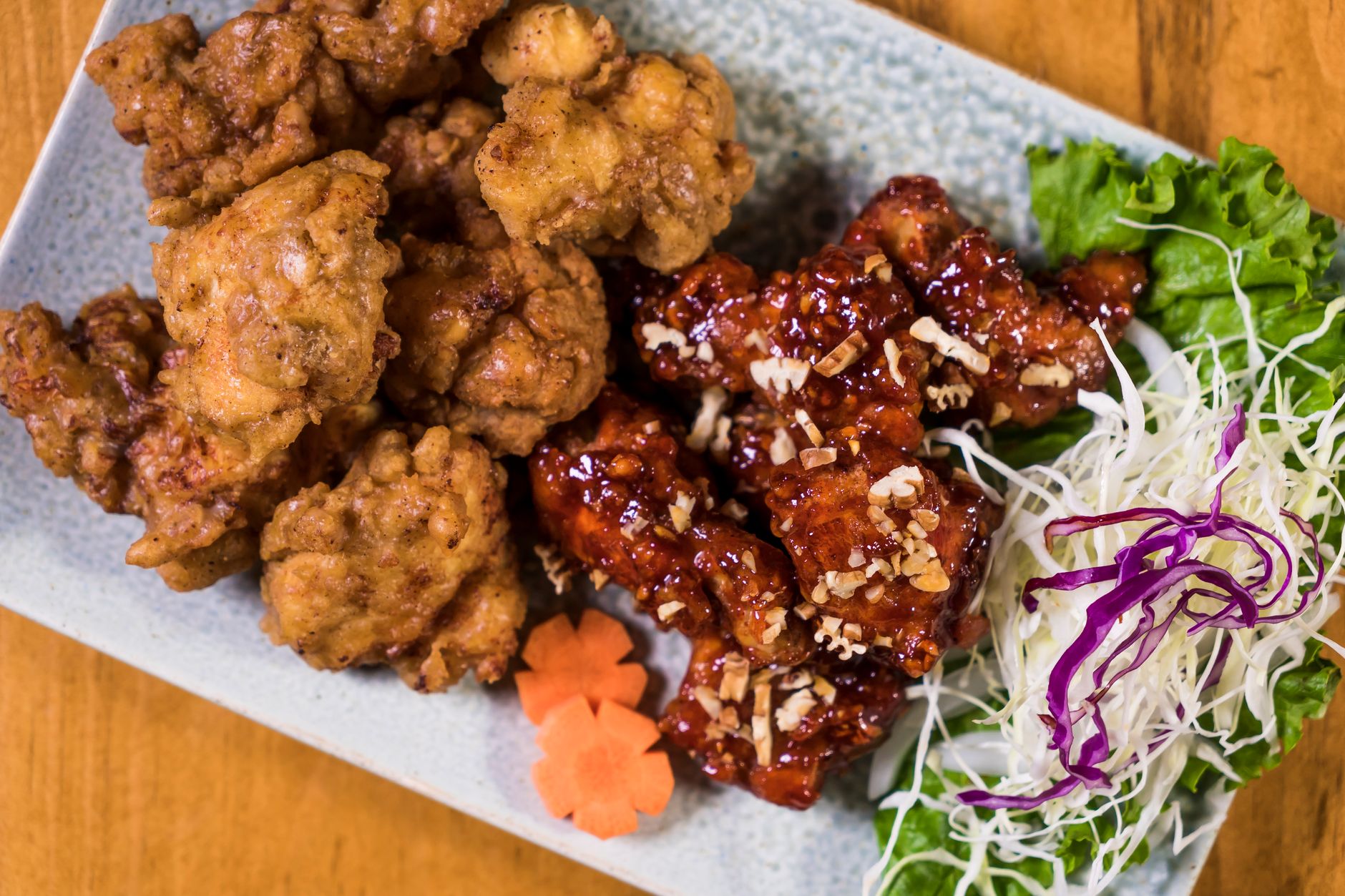
10 Sides That Actually Go With Korean Fried Chicken
Korean fried chicken is boldly seasoned, satisfyingly crispy, and unlike anything from a standard fast-food menu. The right sides make it a complete meal. This guide covers 10 sides that genuinely complement every style of Korean fried chicken, whether you're ordering soy-glazed, spicy, or original.
15 min read
7 Best Places to Eat After a Late Movie in Fort Lee, NJ
Finding good food after a late movie in Fort Lee is easier than you think. From Korean fried chicken at 101 Chicken to late-night ramen and deli spots, this guide covers the most reliable options in and around Fort Lee, NJ, so you never leave the theater hungry.
12 min read