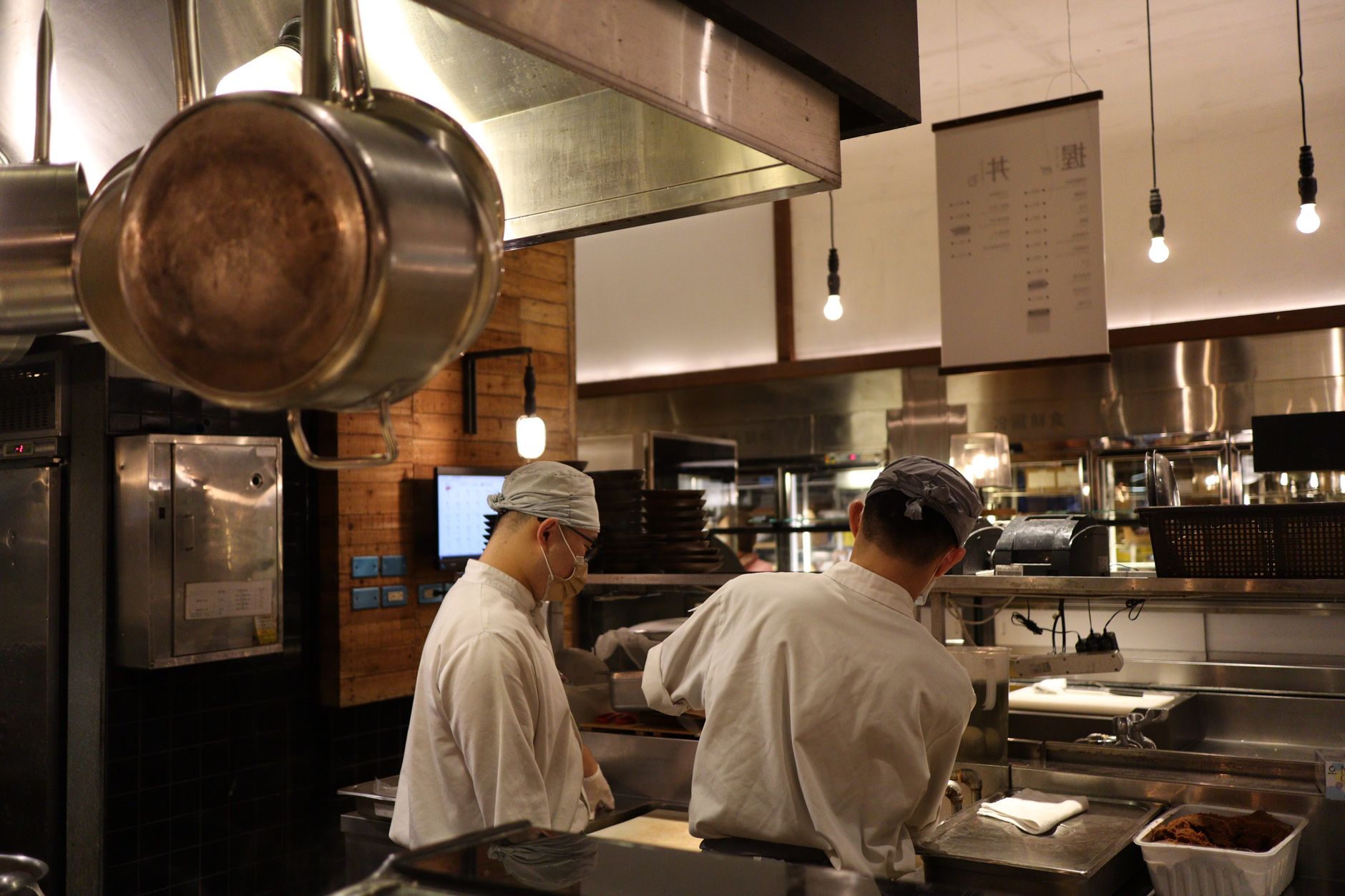
Kitchen automation reduces restaurant labor costs by cutting front-line headcount, improving throughput consistency, and reducing overtime exposure. Industry benchmarks show labor dropping from 35% to as low as 22-28% of revenue in automated quick-service kitchens (dishwasherhero.com).
What Does Restaurant Labor Actually Cost Before Automation?
Before you can calculate an ROI on automation equipment, you need an honest baseline. Restaurant labor cost benchmarks show full-service restaurants running 30-35% of revenue on labor, while quick-service concepts target 25-30% (dishwasherhero.com). Independent operators, however, frequently land in a harder range: 38-45% of revenue, a gap that compounds on every shift served (dishwasherhero.com). That is the number automation is measured against, not the posted wage on a job listing.
How Do Loaded Labor Costs Differ From Posted Wages?
The wage on the job posting is the floor, not the ceiling. Employers in New Jersey and across the country carry payroll tax obligations on top of every dollar they pay hourly workers. State unemployment insurance, workers compensation, and any health contribution push the true cost of a $15.92 (nj.gov)-per-hour kitchen worker meaningfully higher. Scheduling inefficiency adds a separate layer: operators regularly pay for 25-30% more labor hours than their actual productive output requires, because minimum crew requirements apply at every shift regardless of ticket volume (dishwasherhero.com). The National Restaurant Association's 2025 State of the Restaurant Industry Report confirms labor is the single largest controllable expense category, at 30-35% of revenue for full-service operations (ustechautomations.com). When you add it up, an investor underwriting a Fort Lee restaurant deal needs to model loaded cost, not posted wages.
Why Late-Night Operations Amplify Labor Cost Problems
Late-night shifts create a structural inefficiency that no amount of careful scheduling fully solves. Minimum crew requirements apply regardless of whether 12 tables or 2 are occupied. In Fort Lee specifically, proximity to the George Washington Bridge generates burst demand patterns: a wave of post-commuter traffic, a gap, then late-night demand from diners heading home from Manhattan. That rhythm is hard to staff efficiently with a purely human crew. Turnover makes it worse. QSR restaurants nationally replace their entire workforce more than once per year, with annual turnover rates reaching 130-150% (gratuitysolutions.com). Late-night hourly positions are among the hardest to fill and retain. Each departure costs, on average, $5,864 per employee in recruiting, onboarding, and training losses (nowsta.com). For a restaurant running multiple late-night shifts per week, that figure compounds fast.
How Does Kitchen Automation Reduce Labor Expenses in Practice?
Automation works through three distinct mechanisms, and investors should understand all three before modeling returns. At 101 Chicken, we have observed that the three mechanisms work in concert: headcount reduction at the fry station, consistency improvements that cut product waste, and throughput leverage that allows our core crew to handle more covers per shift. The first is headcount reduction: fewer people are needed at the frying station when a robotic system manages oil temperature, immersion timing, and basket cycling without human intervention. The second is consistency: automated cooking eliminates the variance that produces overcooked or undercooked product, cutting food waste and reducing the need for expeditors to catch errors. The third is throughput leverage. The same core crew can handle more covers per hour when they are not manually managing the most time-intensive station. Across restaurants using automated scheduling platforms, labor cost percentage drops by an average of 2.1 percentage points, worth roughly $21,000 per year on a $1 million revenue restaurant (ustechautomations.com). Overtime cost reductions of 20-30% are consistently reported in workforce automation studies (ustechautomations.com). Automation does not eliminate labor. It reallocates it.
What Types of Automation Are Available for Chicken Restaurant Kitchens?
The automation landscape for QSR kitchens spans a range of price points and integration complexity. Understanding the options matters because investors often default to imagining a fully robotic kitchen when partial automation is frequently the more practical starting point. The categories below map to the actual equipment decisions a Fort Lee operator would evaluate.
Frying automation specifically addresses the station with the highest injury risk in a kitchen: hot oil handling. Eliminating that manual step reduces workers compensation exposure, which in New Jersey food service is above the national median. That insurance savings line often goes unmodeled in ROI projections, but it is real and recurring. ABC7 New York reported on the robot chefs working our fry station.
How Does 101 Chicken's Robot Kitchen Operate as a Working Example?
At 101 Chicken, we run a robot-assisted frying kitchen on Lemoine Ave in Fort Lee, NJ, integrated with our dine-in, pickup, and delivery order flow. The system manages the frying station during our highest-risk labor hours: late-night weekend shifts when recruiting and retention are hardest and demand spikes arrive unpredictably. Our robot kitchen is not a concept or a projection. It is a live operation that NJ.com, ABC7 New York, and other outlets have covered directly. The practical outcome is that a smaller core crew can maintain consistent throughput during peak demand windows without requiring an additional senior kitchen employee at the fry station. For Bergen County diners arriving after 10 PM, the food quality is the same as during a 6 PM dinner rush. That consistency is the product of automation, not heroics from an exhausted crew. For investors evaluating whether this format scales, our Fort Lee kitchen is a reference site, not a pitch deck. The full list of write-ups is on our press page.
What Are the Buildout and Equipment Costs for an Automated Restaurant Kitchen?
Capital cost analysis for restaurant automation must span a 3-5 year horizon. A single-year expense view makes automation look expensive. A payback-period view makes it look rational, particularly in a high-wage market like Bergen County, NJ. In New Jersey, buildout costs run above national averages because of construction labor rates, Bergen County permitting timelines, and commercial lease rates that are among the highest in the state. Those factors elevate the total investment but also elevate the labor cost baseline that automation is displacing, which compresses the payback period relative to lower-cost markets.
How Does Automation Capital Cost Compare to Annual Labor Savings?
The ROI math rewards specificity. The payback calculation shortens further when you factor in turnover avoidance. In our experience at 101 Chicken, scheduling satisfaction improvements from automation reduce voluntary turnover significantly, which compounds the financial benefit beyond the direct labor savings. Scheduling satisfaction improvements from automation reduce voluntary turnover by 15-20% (ustechautomations.com). At a replacement cost of $5,864 per employee (nowsta.com), even preventing three departures per year adds more than $17,000 back to the savings column. High-wage, high-turnover markets like NJ produce faster payback than low-wage rural markets for exactly this reason. The labor cost baseline is higher, so every percentage point of reduction is worth more in absolute dollars. This is why automation pays off fastest in high-volume restaurants in markets like Fort Lee, not in lower-volume rural operations where the labor cost per hour is structurally lower.
Equipment Costs, Integration, and the Lease vs. Buy Decision
Vendors including Miso Robotics have offered lease or robot-as-a-service models that convert capital expense to a monthly operating line item. The break-even calculus is different from an outright purchase. Maintenance costs and downtime history matter significantly in this calculation. A robotic frying station that is offline for repairs during a Friday night peak shift does more damage than the equipment cost suggests. Investors should request documented uptime and maintenance records from any vendor before signing a lease. Integration costs are also frequently underestimated. Connecting robotic frying equipment to an existing POS and KDS system is not plug-and-play; it requires configuration time, staff training, and in some cases middleware software that adds to total project cost.
What Licensing and Regulatory Steps Are Required for Automated Restaurants in New Jersey?
New Jersey restaurant licensing requirements apply uniformly, regardless of how automated the kitchen is. Automation does not create a new regulatory category, but it does interact with several existing requirements in ways that Bergen County operators should understand before construction begins. The standard requirements for a new Fort Lee food service establishment include: NJ Business Registration with the Division of Revenue, a Certificate of Occupancy from Fort Lee's building department, a Food Establishment Permit from the Bergen County Health Department, and a Fire Safety inspection. These steps apply to a conventional kitchen and to an automated one equally. What changes with automation is scope: health inspectors evaluating a robotic frying system will assess whether the equipment meets NSF International standards for commercial food contact surfaces. Not all robotic kitchen equipment sold in the US currently carries NSF certification, and deploying non-certified equipment creates a compliance risk that could trigger a permit issue during inspection. NJ Division of Consumer Affairs food handler certification requirements also apply: automation reduces the number of staff who need certification, but it does not eliminate the requirement entirely.
What NJ-Specific Labor Laws Affect the Automation ROI Calculation?
New Jersey's 2026 minimum wage of $15.92 per hour (sideworks.ai) is the hourly cost floor that automation is measured against in every pro forma we have seen for this market. State-level predictive scheduling discussions, active in Trenton through 2025-2026, could impose advance scheduling requirements that make flexible labor deployment harder and increase the operational value of automated stations that require no scheduling at all. NJ workers compensation rates for food service employees are above the national median, amplifying the savings from any station that removes human physical handling of hot oil and heavy equipment. Automated frying systems are the clearest example. On the tax side, equipment purchases may qualify for federal Section 179 deductions, allowing operators to expense the full cost of automation equipment in the year of purchase rather than depreciating it over seven years. A qualified CPA should model this before finalizing the investment decision.
How Should a Prospective Franchisee or Restaurant Investor Evaluate Automation ROI?
The financial outcome of kitchen automation depends heavily on volume, wages, menu complexity, and equipment costs. That sentence is not a caveat. It is the reason generic payback ranges are useless to a serious investor. The correct approach is to build a five-year pro forma that models labor cost as a percentage of revenue under three scenarios: manual kitchen, partial automation (single-station frying plus KDS), and full automation. Use documented industry benchmarks from the National Restaurant Association, Bureau of Labor Statistics, and published vendor case studies as inputs. Do not anchor to a vendor's marketing projections without cross-referencing independent data. The job reallocation question deserves specific modeling. Automation shifts labor toward supervisory roles, quality control, and customer-facing positions. Those roles typically carry higher wages than line fry-station positions. A $15.92 (nj.gov) (nj.gov)-per-hour fry cook replaced by a robot does not save $15.92 per hour if the operator must hire a $22-per-hour equipment supervisor to manage the system. Task-by-task labor mapping, not headcount reduction alone, produces an accurate savings estimate. Our team at 101 Chicken recommends that any investor visit an operating automated kitchen, not a demonstration unit, before committing capital. We welcome prospective franchise partners to observe our robot-assisted kitchen on Lemoine Ave during peak service hours to evaluate automation performance in a real operating environment. The question of how the system handles peak volume without human backup at the fry station is best answered by watching a Friday night service, not by reading a spec sheet.
What Questions Should Investors Ask Before Committing to an Automated Kitchen Concept?
Due diligence on an automated kitchen concept requires a different checklist than a conventional QSR evaluation. The questions below are the ones we believe matter most, based on running a live robot-assisted kitchen in Fort Lee and observing what prospective franchise partners ask when they visit.
First, ask for documented labor cost percentage at the existing automated location, confirmed by a third party rather than self-reported by the franchisor. Second, request the maintenance cost and downtime history for the robotic equipment, broken down by quarter. A single major breakdown during a peak season shifts the payback calculation materially. Third, ask specifically how the system handles peak volume failure: if the automation goes offline mid-shift, what is the backup protocol and how many additional staff does it require? Fourth, ask about training time. Onboarding a new crew member on an automated line versus a conventional kitchen is a different process, and the answer affects your ongoing labor cost projection. Fifth, verify whether the automation equipment carries NSF certification and whether it has passed Bergen County health inspection at an existing location. These are yes-or-no questions with no ambiguous middle ground. Franchise candidates interested in the 101 Chicken model can initiate inquiry through our official franchise contact channel to receive unit economics disclosures and verify these claims independently.
Frequently Asked Questions
What percentage of revenue do restaurant labor costs typically represent in 2026?
How much does it cost to automate a quick-service restaurant kitchen?
Does kitchen automation eliminate the need for kitchen staff entirely?
How long does it take to get a return on investment from restaurant automation equipment?
What is the 2026 minimum wage for restaurant workers in New Jersey?
How does 101 Chicken use robot-assisted equipment in its Fort Lee kitchen?
What licenses does a new restaurant in Fort Lee, NJ need before opening?
Is a Korean fried chicken restaurant format well-suited to kitchen automation?
How do I request franchise information from 101 Chicken?
Sources & References
- Restaurant Employee Turnover Rate: 2026 | Gratuity Solutions (opens in a new tab)[industry]
- Restaurant Scheduling Automation ROI: The Real Numbers (2026) | US Tech Automations (opens in a new tab)[industry]
- New Jersey Restaurant Labor Laws (2026): Wages, Tips & Overtime | Sideworks (opens in a new tab)[industry]
- New Jersey Department of Labor - My Work Rights: Tipped Workers (opens in a new tab)[gov]
- Restaurant Turnover Rates: Real Cost of Losing Staff | Nowsta (opens in a new tab)[industry]
- Restaurant Labor Cost Guide 2026 | DishwasherHero (opens in a new tab)[industry]
- abc7ny.com (opens in a new tab)[industry]
About the Author
101 chicken
101 Chicken is Fort Lee's premier destination for fresh, expertly prepared chicken dishes, offering convenient dine-in and online ordering seven days a week with extended late-night weekend service.
Learn more at www.101chicken.com → (opens in a new tab)Related Posts

Ordering Office Lunch in Bergen County: A Practical Guide
Feeding a team of 10 or more in Bergen County takes more planning than a solo lunch run. This practical guide walks you through lead time, per-person quantities, packaging considerations, and how to handle a mixed crowd's spice preferences — so your office order arrives right the first time.
11 min read
Soy, Spicy, or Original: Which Korean Fried Chicken Sauce Should You Order?
Never ordered Korean fried chicken before? The sauce decision feels bigger than it is. This guide breaks down the three core sauce styles — soy garlic, spicy, and original — so you can order with confidence the first time.
13 min read
Korean vs American Fried Chicken: Why the Crust Is Completely Different
Korean and American fried chicken share a name but almost nothing else. From the twice-frying technique to the ultra-thin glassy crust, Korean fried chicken is a genuinely different eating experience. If you've never tried it, here's exactly what sets it apart before you order.
11 min read