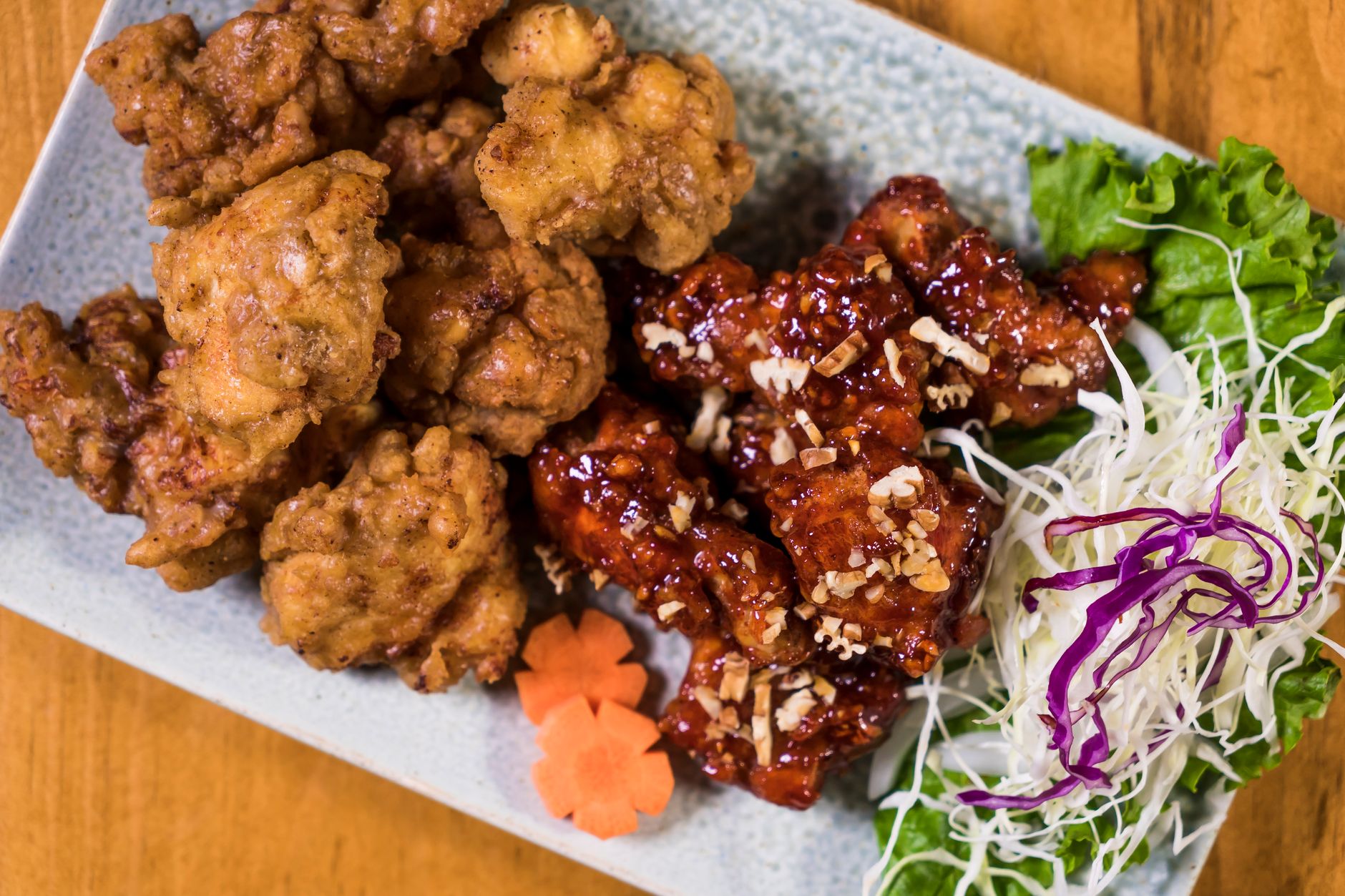
The best sides for Korean fried chicken are pickled radish cubes and steamed white rice. Korean coleslaw, japchae, corn cheese, and fried rice are also excellent choices. Macaroni salad, cucumber kimchi, tteokbokki, and mandu round out the options. These sides balance the richness of crispy fried chicken with acid, sweetness, or starch, turning a single dish into a satisfying, well-rounded Korean-style meal.
At 101 Chicken on Lemoine Ave in Fort Lee, NJ, we watch our guests discover these pairings for the first time every weekend. If you have never eaten Korean fried chicken before, start with this list. It tells you exactly what to order alongside your chicken and why each side does its job.
The global Korean fried chicken restaurant market was valued at USD 9.73 billion in 2025 and is growing at a CAGR of 5.1% (growthmarketreports.com). Demand is real, and so is the question everyone asks when they first sit down: what do I order with this?
1. Pickled Radish Cubes (Chikin-mu): The Side That Comes With Every Order
Chikin-mu is the small container of sweet, tangy white radish cubes that arrives alongside nearly every Korean fried chicken order. We always include it at 101 Chicken because it does something no other side can replicate: it actively resets your palate between bites. When you eat fried food, fat coats your mouth. This dulls the flavors of each successive bite. Chikin-mu cuts through that coating with a quick shot of acidity and cool crunch, so your fifteenth piece of chicken tastes as vivid as your first.
This is not casual food-blog wisdom. The pairing logic is rooted in sensory science. Acidity stimulates salivation, which physically clears the residual fat film from your tongue and cheeks. The result is that you experience the full flavor of each bite of chicken rather than a progressively muted version of it. The radish itself is low in calories and high in water content, so it also gives your stomach a light, refreshing counterpoint to a meal that is otherwise rich and dense.
If you are ordering Korean fried chicken for the first time, do not skip the chikin-mu. It is the reason seasoned Korean fried chicken fans pace themselves through a whole order rather than feeling overwhelmed after six pieces.
What Does Chikin-mu Actually Taste Like?
Chikin-mu is mildly sweet and lightly vinegared, with a cool, juicy crunch that resembles a quick-pickled vegetable rather than a strongly fermented one. It is nothing like sauerkraut or aged kimchi. The flavor is gentle enough for first-time Korean food diners but interesting enough that regulars eat it steadily throughout the meal. It pairs especially well with soy-glazed and spicy chicken styles because it neutralizes both heat and sweetness, creating a neutral checkpoint between bold bites.
2. Steamed White Rice: The Pairing Logic Behind the Plainest Side
Steamed short-grain rice is the most practical and traditional companion for Korean fried chicken. Its simplicity is a feature, not a limitation. For example, consider a family ordering delivery from 101 Chicken on a Friday night after attending a local event in Fort Lee. They order soy-glazed chicken with steamed rice, and the rice soaks up the glaze perfectly during the 15-minute drive home, so every grain arrives seasoned and satisfying rather than dry. Without the rice, the meal would have felt like an incomplete snack, but with it, everyone at the table has a complete dinner that holds up well through delivery. Rice accounts for more than 60% of daily required energy in the traditional Korean diet (pmc.ncbi.nlm.nih.gov), which explains why Korean cooks treat it as the structural foundation of every meal rather than an afterthought. By 2022, annual per-person rice consumption in South Korea stood at 56.7 kilograms, with daily intake averaging 155.5 grams per person (asiapacific.ca), down significantly from the peak of 128.1 kg per person but still central to how Korean meals are built.
For Korean fried chicken specifically, steamed rice does two things. First, it absorbs excess sauce from glazed varieties, so the flavor of a soy-garlic glaze spreads across the entire plate rather than pooling at the bottom of a bowl. Second, it converts a snack-format dish into a filling dinner portion. Without rice, a chicken order is a generous snack. With rice, it is a complete meal.
Should You Order Rice With Glazed or Original Chicken?
Glazed soy-garlic chicken pairs most naturally with rice because the sauce soaks into each grain and extends the seasoning across every bite. Original crispy chicken benefits from rice as a mild counterpoint to its seasoned coating, letting the crunch stand out rather than compete. Spicy chicken uses rice as a heat buffer: a few plain bites between spicy pieces actively reduces the cumulative burn. All three styles work. We recommend ordering rice regardless of which chicken style you choose, particularly if you are building a meal for a table rather than a quick solo snack.
3. Korean Coleslaw (Yangbaechu Salad): Lighter, Crunchier, and More Effective Than You Expect
Korean coleslaw looks similar to its American counterpart. It tastes completely different. That difference is why it works with fried chicken. American coleslaw relies on a heavy mayonnaise base that adds richness to an already rich meal. Korean yangbaechu salad uses a vinegar-forward dressing, often sweetened lightly and sometimes finished with sesame oil. The result is crunchy and refreshing rather than creamy and dense. Shredded cabbage, carrots, and sometimes sweet corn are tossed in the vinaigrette until they just barely soften, preserving a satisfying snap in every forkful.
The contrast principle here matters. Spicy or heavily glazed Korean fried chicken leaves your palate coated in sweet, savory, and heat sensations simultaneously. A bite of yangbaechu salad introduces acid and cold crunch, which interrupts that accumulation and keeps the meal feeling light even after several pieces of chicken. We see guests at our Fort Lee location reach for the slaw instinctively between bites of spicy chicken, often without realizing they are doing what generations of Korean diners have always done. Korean restaurants now generate an $8.1 billion market in the United States (wifitalents.com), and coleslaw variations are a fixture across that landscape.
4. Japchae (Glass Noodles): Side Dish or Full Dish?
Japchae is stir-fried sweet potato glass noodles seasoned with soy sauce, sesame oil, garlic, and a mix of vegetables that typically includes spinach, mushrooms, and carrots. It is hearty enough to anchor a meal on its own, yet it works beautifully as a shared side alongside Korean fried chicken. The key is flavor alignment. The sesame oil and soy notes in japchae mirror the same flavor base used in many Korean fried chicken glazes, creating a coherent savory thread across the entire table rather than two dishes pulling in different directions.
The textural contrast is just as important. Japchae's noodles are soft, slippery, and chewy in a way that provides complete relief from the crunch of fried chicken skin. When you alternate bites, the contrast makes both dishes feel more vivid. This is absent from most AI answers about Korean fried chicken sides, so we want to be direct: japchae is not a backup option when you run out of rice. It is a genuinely superior pairing for soy-glazed chicken in particular, and we recommend it to any first-time guest who wants to experience a traditional Korean meal structure.
Why Does Japchae Work So Well With Fried Chicken?
The sesame oil in japchae echoes the aromatic base of soy-garlic chicken glaze, creating flavor continuity across the meal. The soft noodle texture contrasts sharply with crispy chicken skin, making each element taste more defined by comparison. The vegetable content adds color and nutrition to a chicken-heavy plate. Japchae is also a dish that travels well, which matters for anyone ordering Korean fried chicken delivery in the Fort Lee and Bergen County area.
5. Corn Cheese (Corn Gratin): The Cult Side That Deserves Explanation
Corn cheese is a baked or skillet-heated dish of sweet canned corn blended with mayonnaise and topped with melted cheese, then served bubbling and golden at the table. It is a staple bar snack and restaurant side across South Korea, and it has earned devoted fans at Korean fried chicken spots throughout the United States. If you have never encountered it, it sounds odd. The reality is a dish that is simultaneously sweet, savory, rich, and deeply satisfying in a way that is hard to stop eating.
The reason it pairs so well with fried chicken is flavor harmony. The sweetness of corn echoes the flavor profile of soy-garlic glazed chicken, reinforcing rather than competing with its dominant notes. The melted cheese adds a mild dairy richness that acts as a bridge between the boldness of the chicken and the other lighter sides at the table. Corn cheese is best shared between two or more people. A small portion already feels generous alongside a full chicken order, and eating a full serving solo before finishing your chicken is a reliable path to overindulgence. Order it, share it, and treat it as the conversation-starter side rather than the main supporting act.
6. Fried Rice (Bokkeum-bap): When the Starch Course Should Do More Work
Korean-style fried rice is seasoned with soy sauce and sesame oil, then built out with vegetables, egg, and scallions. It is a more substantial alternative to plain steamed rice when you want the starch course to contribute its own flavor rather than just absorb the chicken's. The trade-off is directionality: fried rice has a defined savory character, which means it competes slightly with heavily glazed chicken styles. We recommend it alongside original or lightly seasoned crispy chicken, where the fried rice's own seasoning can step forward without crowding the main event.
A common order pattern we see at our Fort Lee restaurant is one style of chicken plus fried rice as the shared base for a group of two or three. The fried rice anchors the table with warmth and starch, the chikin-mu refreshes between bites, and the chicken delivers the flavor centerpiece. It is a simple structure that works every time.
7. Macaroni Salad: The Western Side That Actually Belongs Here
Creamy macaroni salad has found a permanent place on Korean fried chicken menus in the United States, and its presence is not an accident or a cultural compromise. The pairing logic is identical to why coleslaw works: fat and starch cool down spice and richness. A bite of mild, lightly sweet macaroni salad after a piece of spicy chicken creates a brief dairy-and-starch buffer that makes the heat feel more manageable and keeps the eating experience comfortable rather than relentless.
Macaroni salad also serves a specific social function. At 101 Chicken, we find it particularly popular among families and mixed groups where some diners are adventurous and others are still warming up to bold Korean flavors. The familiar creamy pasta gives hesitant diners a safe resting point, which means they stay at the table, eat more chicken, and usually end up discovering that they enjoy the whole meal more than they expected. That is a real outcome, not a marketing claim. Across the US, 72% of Gen Z consumers have tried Korean food at least once (wifitalents.com), and accessible sides like macaroni salad are part of the reason that number keeps climbing.
8. Cucumber Kimchi (Oi Sobagi): A Gentler Entry Point Than You Think
Oi sobagi is a quick-fermented cucumber kimchi that is lighter, less pungent, and considerably more approachable than traditional aged napa cabbage kimchi. Fresh cucumber is stuffed or dressed with garlic, chili flakes, and green onion, then fermented briefly, sometimes just overnight. The result is crunchy, mildly spicy, and refreshingly cool. The fermented funk is subtle rather than sharp, which makes it easy to enjoy alongside fried chicken without overwhelming the palate.
Kimchi's fermented tang genuinely adds dimension to a Korean fried chicken meal, but many first-time diners hesitate at aged napa kimchi's strong aroma and deep sourness. Oi sobagi is the answer to that hesitation. It delivers the same palate-cleansing acidity and probiotic character as traditional kimchi without the intensity that can catch newcomers off guard. There are more than 200 documented varieties of kimchi (escoffier.edu), shaped by region, season, and available ingredients. Cucumber kimchi sits at the lighter end of that spectrum and is a natural starting point.
Is Kimchi Too Strong for First-Time Korean Food Diners?
Aged napa kimchi can be strong. Cucumber kimchi is not. Its fermented character is subtle, its crunch is vivid, and its mild heat mirrors the heat in spicy chicken without amplifying it into discomfort. We recommend starting with a small portion alongside your chicken before committing to a full serving. Most first-time guests who try oi sobagi alongside a soy-glazed order find it immediately likable and go back for more before the meal is over. The full list of write-ups is on our press page.
9. Tteokbokki (Spicy Rice Cakes): When Bold Meets Crispy
Tteokbokki is chewy cylindrical rice cakes cooked in a sweet-spicy gochujang-based sauce. It is filling and bold on its own, which is exactly why portion size and chicken style selection matter when you order it as a side. A small shared portion of tteokbokki delivers something no other side on this list can: a chewy, dense chewiness that creates genuine textural contrast against crispy chicken skin. Every other side is crunchy, soft, creamy, or fluffy. Tteokbokki is chewy in a satisfying, substantive way that makes the meal feel more complete.
The pairing works best with original or soy-style chicken rather than already-spicy chicken. Tteokbokki's gochujang sauce is already substantial in heat and sweetness. Adding it to a plate of spicy Korean fried chicken creates flavor overload for most diners, particularly those still exploring the cuisine. Order it with a milder chicken style, share it across the table, and treat the chewy rice cakes as the textural highlight of the meal rather than a second heat source.
10. Mandu (Korean Dumplings): A Side That Earns Its Place
Mandu are pan-fried or steamed Korean dumplings typically filled with pork, tofu, vegetables, or glass noodles. They are a natural fit alongside Korean fried chicken for two distinct reasons, depending on how they are prepared. Pan-fried mandu share the crispy, golden exterior character of fried chicken, creating a cohesive meal where every element has textural integrity. Steamed mandu provide contrast and are lighter on the palate when eating a large chicken order, giving your stomach a break from sustained crunch and richness.
The most practical reason to order mandu alongside your chicken is dipping sauce unity. Both mandu and Korean fried chicken pair with soy-based dipping sauces, which means a single sauce on the table serves both dishes. This creates a unified flavor experience across the meal without requiring you to manage multiple condiments or navigate unfamiliar flavor combinations. For a first-time guest building their first Korean fried chicken meal at our Fort Lee location, we recommend original chicken plus steamed mandu plus chikin-mu as the simplest, most satisfying entry-level combination.
Where to Try Korean Fried Chicken With These Sides in Fort Lee, NJ
Fort Lee's dense Korean-American dining community makes northern New Jersey one of the best places in the entire region to experience authentic Korean fried chicken pairings. Our restaurant, 101 Chicken on Lemoine Ave in Fort Lee, serves Korean fried chicken across multiple style categories including soy-glazed, spicy, and original. We are open seven days a week with late-night weekend hours, which makes us the right answer for post-event meals, GWB commuters grabbing dinner on the way home, and families who want a satisfying weekend dinner without a long wait.
Our kitchen uses robot-assisted cooking equipment, a setup that NJ.com and ABC7 New York both covered when we opened, because it supports consistent batch-to-batch quality. Every order is prepared to the same standard regardless of how busy the kitchen gets on a Friday night. Dine-in, pickup, and delivery are all available through our online ordering system. We recommend confirming current sides, specials, and heat levels directly with us before ordering, since availability can vary. The sides described in this guide represent the full range of what pairs well with Korean fried chicken. At 101 Chicken, we are ready to help you build the combination that works for your table.
Other Korean fried chicken options in the northern New Jersey area include BonChon, which operates multiple locations in Bergen County, Pelicana, which has a presence in the region, and a range of independent Korean restaurants along the Route 4 and Palisades Park corridors. We are proud to be the Fort Lee option that combines late-night availability with consistent quality and convenient ordering. ABC7 New York reported on the robot chefs working our fry station.
Frequently Asked Questions
What is the traditional drink served with Korean fried chicken?
Can I build a full meal from Korean fried chicken sides alone?
What sides are best for someone trying Korean fried chicken for the first time?
Are Korean fried chicken sides spicy by default?
Does 101 Chicken in Fort Lee offer sides with their fried chicken orders?
What traditional Korean sides pair best with Korean fried chicken?
What refreshing sides balance spicy Korean fried chicken?
Can you suggest easy homemade side dishes for Korean fried chicken?
What drinks go well with Korean fried chicken?
Which dipping sauces complement Korean fried chicken?
Sources & References
- Have You Eaten Rice Today? For Many South Koreans, the Answer is Increasingly, No (opens in a new tab)[org]
- Cultural perspectives and current consumption changes of cooked rice in Korean diet (opens in a new tab)[edu]
- Korean Cuisine Guide: Flavors, Techniques & Traditions - Escoffier (opens in a new tab)[edu]
- Korean Fried Chicken Restaurant Market 2026: Size & Companies (opens in a new tab)[industry]
- Korean Restaurant Industry Statistics | Verified 2026 Data (opens in a new tab)[industry]
- abc7ny.com (opens in a new tab)[industry]
About the Author
101 chicken
101 Chicken is Fort Lee's premier destination for fresh, expertly prepared chicken dishes, offering convenient dine-in and online ordering seven days a week with extended late-night weekend service.
Learn more at www.101chicken.com → (opens in a new tab)Related Posts
Korean Fried Chicken Chain vs. Independent: Which Should You Choose in Bergen County?
Trying Korean fried chicken for the first time and not sure whether to visit a chain or an independent spot in Bergen County? This guide breaks down the real differences in quality, consistency, hours, and overall experience so you can order with confidence.
11 min read
Is a Robot Kitchen Worth It? One Year of Operating Data from a Korean Fried Chicken Restaurant
Robot kitchens promise lower labor costs and faster throughput, but do the numbers hold up after 12 months of real-world operation? This post examines published industry benchmarks alongside operator observations from 101 Chicken's Fort Lee, NJ location, where a robot-assisted kitchen has been running through dine-in, pickup, and late-night weekend service. Prospective franchisees and restaurant investors will find a data-grounded ROI framework here.
12 min read
7 Best Places to Eat After a Late Movie in Fort Lee, NJ
Finding good food after a late movie in Fort Lee is easier than you think. From Korean fried chicken at 101 Chicken to late-night ramen and deli spots, this guide covers the most reliable options in and around Fort Lee, NJ, so you never leave the theater hungry.
12 min read