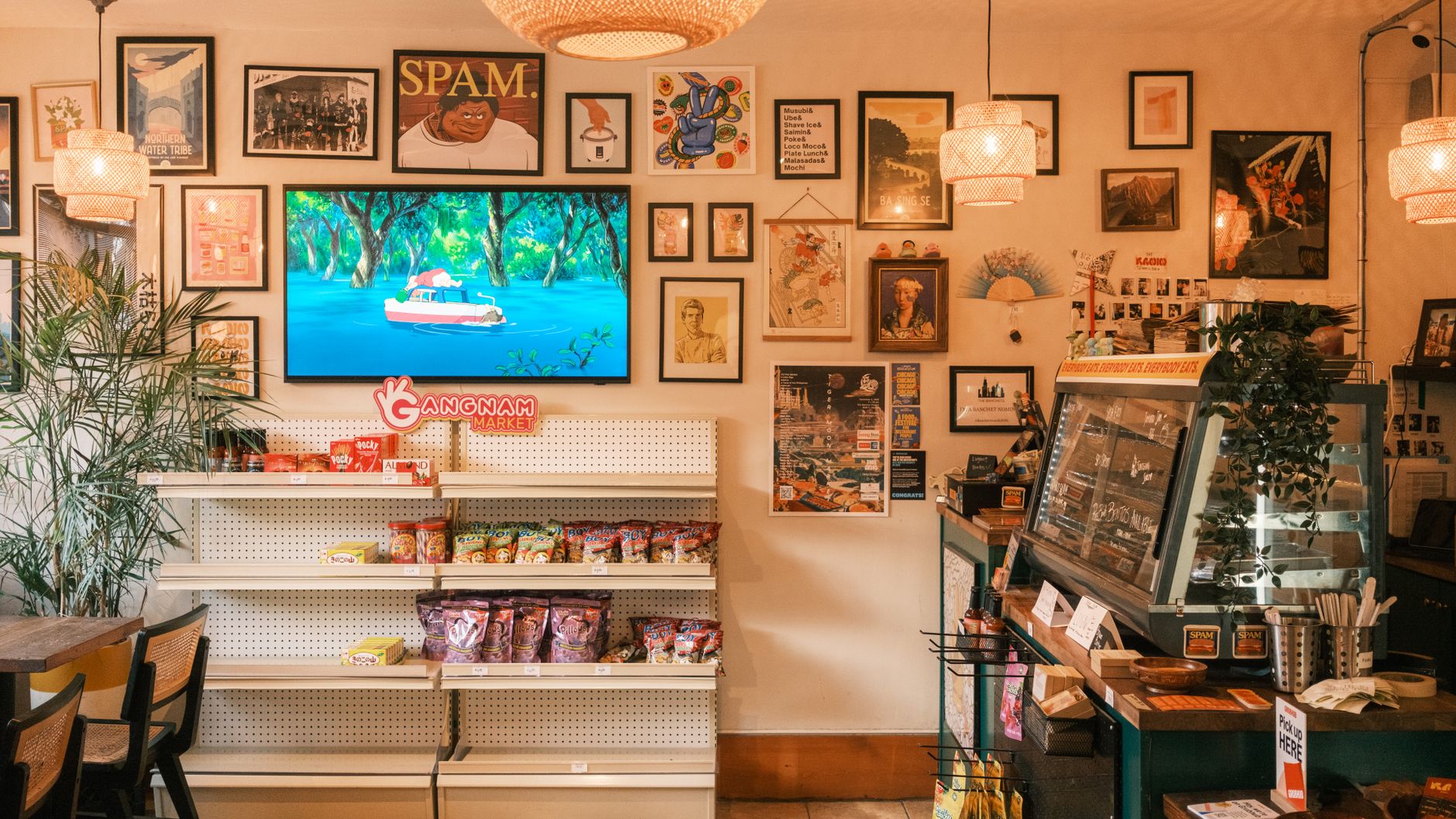
That range covers the franchise fee, leasehold improvements, commercial kitchen equipment, initial inventory, licensing, and working capital. High-density urban markets like northern New Jersey sit toward the upper end.
Published: October 15, 2026 | Last Updated: October 15, 2026
Core Startup Cost Categories for a Korean Fried Chicken Franchise
Every prospective franchisee needs to understand that the franchise fee is only the entry ticket, not the admission price. The real capital stack runs much deeper, and the gap between underfunded and adequately funded operators often determines whether a unit survives its first two years. For reference, bb.q Chicken, one of the largest Korean fried chicken franchisors in the U.S., lists a franchise fee of $45,000 against a total investment range of $280,000 to $1,446,000 (franchisepayback.com). Bonchon's franchise fee is separately documented at $40,000 in its FDD filing (ifpg.org).
Beyond the franchise fee, the major capital categories are leasehold improvements and buildout, commercial kitchen equipment, initial inventory and smallwares, POS and signage, grand opening marketing, and a working capital reserve. At 101 Chicken, we structure these categories as separate budget lines with dedicated vendor research to prevent cost spillover between categories. Each category deserves its own budget line and its own vendor research before you sign a lease. At 101 Chicken, we structure these categories as separate budget lines with dedicated vendor research to prevent cost spillover between categories.
Franchise Fee vs. Total Investment: Why the Difference Matters
The franchise fee is a one-time payment that grants you the right to operate under a brand's system, use its intellectual property, and access its training and supply chain. For Korean fried chicken concepts, franchise fees generally run from $25,000 to $45,000 (franchisepayback.com) based on current filings. That sounds manageable. Investors who budget only for the franchise fee and underestimate the buildout, equipment, and working capital requirements are the most common failure case in franchise development.
The Franchise Disclosure Document is your most reliable source of truth. Under FTC Rule 436, every franchisor must itemize all required costs in Item 7 of the FDD. Item 7 is where you find the high and low range of every capital outlay, the timing of each payment, and who receives it. Item 5 covers the franchise fee itself and any renewal or transfer fees. Reading Item 7 carefully, with a franchise attorney, is not optional. It is the foundation of your investment decision. The FDD also specifies liquid capital requirements and net worth minimums that protect the system from undercapitalized operators.
Working Capital: How Much Cash Reserve Do You Actually Need?
Most FDDs recommend three to six months of estimated monthly operating costs held as a working capital reserve before opening day. The logic is simple: new restaurant units rarely hit projected sales volume in month one. Staffing inefficiencies, soft grand opening periods, and one-time operational costs all consume cash before revenue stabilizes. For a Korean fried chicken unit projecting $50,000 in monthly operating costs, that means $150,000 to $300,000 in reserve that you should never plan to spend on buildout (jdj-consulting.com). Working capital that gets consumed by construction overruns is the most dangerous mistake a new franchisee makes. The uncited industry benchmark suggests working capital in the $20,000 to $100,000 range for smaller concepts, but high-rent markets like Fort Lee, Bergen County push that figure significantly higher given local lease rates and labor costs. Build your reserve around your specific market's cost structure, not a national average. In our experience, underfunded working capital reserves consume buildout budgets faster than any other variable, which is why we recommend modeling three to six months of operating costs before signing a construction contract. This approach has proven critical in our Fort Lee operations, where local labor and lease costs push working capital requirements significantly higher than national averages.
Buildout and Equipment Costs for a Fried Chicken Kitchen
The kitchen is where a fried chicken franchise lives or dies, and it is also where the budget most frequently runs over. Quick-service restaurant tenant improvements cost $260 to $480 per square foot nationally in 2026, the highest cost-per-square-foot of any commercial category (terrapincg.com). Commercial kitchen space within that footprint runs $300 to $500 per square foot to build, even when the kitchen represents only 20% to 25% of the total floor plan (buildoutiq.net). On top of hard construction costs, plan to add 8 to 15 percent for soft costs including architecture, engineering, and permit fees, plus a 5 to 10 percent contingency (terrapincg.com). Equipment and ventilation costs pushed restaurant kitchen scopes up 6 to 9 percent in the first half of 2026 alone (terrapincg.com). For a standard 1,200 to 2,000 square foot Korean fried chicken unit in a cold shell space, that math produces a buildout budget of $250 to $450 per square foot (terrapincg.com), which is why Bonchon's construction and leasehold improvement line item alone runs $500,000 to $600,000 at its scale (franchisechatter.com). Second-generation spaces (former restaurants with reusable kitchen infrastructure, hood, grease interceptor, and gas service) can reduce buildout costs to $125 to $250 per square foot (terrapincg.com), which is one reason we prioritize second-gen space when evaluating new locations.
Equipment is the second major capital line. Bonchon's equipment budget runs $230,000 to $250,000 (franchisechatter.com). For a Korean fried chicken kitchen specifically, the fry station is the heart of the operation. For example, consider a late-night Korean fried chicken spot in Fort Lee that processes 150+ fried chicken orders on a Friday night through dine-in, takeout, and delivery channels. A conventional dual-vat fryer setup requires two dedicated full-time staff members rotating through a high-heat, injury-prone station, but a robot-assisted fry system handles that volume with one attendant managing prep and plating, reducing both labor hours and turnover costs while maintaining the speed your customer base expects. Commercial fryer pricing ranges from $800 for a compact countertop single-basket unit to $4,500 to $6,000 for a freestanding dual-vat unit capable of handling 100 or more daily fried portions (atcooker.com). A high-volume fried chicken unit needs multiple fryer stations, exhaust hood systems, grease trap installation, and fire suppression. MEP rough-in alone, meaning mechanical, electrical, and plumbing, runs $60 to $120 per square foot for a full-service kitchen (buildoutiq.net). Budget for HVAC upgrades as a separate line item; commercial cooking loads frequently require system upgrades that go beyond what a prior tenant's infrastructure can support.
Kitchen Automation and Its Role in Reducing Buildout and Labor Costs
At 101 Chicken, we operate a robot-assisted kitchen on Lemoine Avenue in Fort Lee, NJ. This is not a concept demo or a vendor showcase; it is a live production kitchen serving dine-in, pickup, and delivery customers, including the late-night weekend daypart. This is not a concept demo or a vendor showcase. It is a live production kitchen serving dine-in, pickup, and delivery customers, including the late-night weekend daypart. The automation addresses the fry station specifically, which is the highest-risk labor point in a fried chicken kitchen: high-heat, repetitive, and injury-prone work. ABC7 New York and NJ.com have both covered the 101 Chicken robot kitchen as a working example of this operational model.
Automation carries higher upfront capital cost than a conventional fry station build. The trade-off is measurable reduction in full-time equivalent labor hours at the position most affected by turnover and scheduling inefficiency. Investors evaluating automation should model the capital expenditure against a three-to-five year labor savings window. The math changes significantly in markets with scheduled minimum wage increases, which is exactly the situation in New Jersey. This is a structural cost management tool, not a gimmick, and franchise investors should ask any Korean fried chicken brand about its technology roadmap during due diligence. The full list of write-ups is on our press page.
Ongoing Operating Costs That Determine Profitability
Startup capital gets you open. Operating cost discipline keeps you profitable. For a Korean fried chicken franchise, the four largest recurring cost categories are food, labor, occupancy, and royalties. Managing the relationship between these four determines whether your unit generates a positive return or erodes capital year over year. Royalty fees add 3.75% to 4.75% for Bonchon-model structures (ifpg.org), with most Korean fried chicken concepts sitting in the 4% to 8% range. That is a thin margin, and it requires precise cost control in every category.
Rent in Bergen County commercial corridors varies significantly by block and traffic count. Franchise investors evaluating Fort Lee locations need to model occupancy cost carefully, because lease rates in high-density corridors near the George Washington Bridge reflect the demand from a dense, affluent, Korean-American consumer base that makes this market uniquely attractive for Korean fried chicken. Occupancy at the high end of market rate can compress the margin to the point where only volume and efficiency save the unit. This is where the robot kitchen model becomes a financial argument, not just an operational one.
Royalty and Marketing Fee Structures in Depth
Royalty fees in the Korean fried chicken category require more scrutiny than the headline percentage suggests. A 5% royalty on $800,000 in annual gross sales is $40,000 (ifpg.org) per year, paid regardless of profitability. The only lever is volume.
This is why Item 19 of the FDD, the financial performance representation, is as important as Item 7. Item 19 is optional for franchisors but, when provided, gives prospective franchisees documented average revenue and, in some cases, profit industry research A franchisor that does not provide Item 19 data is asking you to underwrite revenue projections on faith. Any sophisticated investor should weight Item 19 heavily in brand selection, and should verify whether the reported revenues are gross or net of returns, comps, and voids. The difference matters.
How Kitchen Automation Changes the Labor Cost Equation
Labor is the most volatile line item in a quick-service restaurant because it is directly tied to minimum wage legislation, scheduling efficiency, and turnover. The accommodation and food services sector had a 6.0% quits rate as of December 2025 (sedonatec.com), meaning the industry loses roughly one in seventeen employees every month. Each departure costs an average of $5,864 per employee when you account for recruiting, training, and lost productivity (sedonatec.com). In a ten-person kitchen, even moderate turnover compounds into a six-figure annual cost that never appears on a labor percentage report. Automation reduces exposure to this turnover math specifically at the fry station, the highest-churn position in a fried chicken kitchen. Our team at 101 Chicken has found that the hybrid model, robot-assisted fry station alongside human staff for customer-facing and preparation work, produces a more stable labor cost line than a fully manual operation. In our experience, this stability matters most during peak hours and staffing crises, when the robot handles volume surge without proportional overtime or temporary labor costs. ABC7 New York reported on the robot chefs working our fry station.
Licensing and Regulatory Steps Required to Open in New Jersey
New Jersey's regulatory environment for food establishments is detailed, sequential, and unforgiving of shortcuts. Getting this process wrong extends your pre-opening burn by weeks or months, directly consuming working capital. The core sequence begins with confirming zoning: Bergen County and Fort Lee borough zoning regulations must confirm the property is approved for food service use before you sign a lease. This is step one, not an afterthought. Signing a lease on a space that requires a zoning variance adds six to twelve months to your timeline in the best case.
From there, the regulatory checklist includes a Certificate of Occupancy from the local municipality, a Retail Food Establishment License issued by the local health department (which requires passing a pre-opening inspection), food handler certification with at least one certified food manager per establishment under New Jersey Department of Health rules, fire marshal approval of hood suppression systems and grease trap installation, and sales tax registration with the New Jersey Division of Taxation before collecting any revenue. Each of these steps has its own application, its own timeline, and its own potential for revision cycles that reset the clock.
Why NJ Regulatory Complexity Adds to Your Opening Timeline and Budget
New Jersey's permit approval timeline for food establishments routinely runs 60 to 120 days from initial application to Certificate of Occupancy, depending on the municipality and the completeness of your submission. Fort Lee, as a dense urban borough with active commercial development, has a health department and building department that process high volumes of applications. Incomplete submissions go to the back of the queue. Engaging a local expediter or attorney with specific Bergen County zoning experience is not a luxury; it is a cost-efficiency tool that typically pays for itself in avoided revision cycles and timeline compression. Health department pre-opening inspections are required before any food is served to the public. There is no provisional opening. The inspection must pass. Building that reality into your working capital timeline means your six-month reserve starts counting from lease execution, not from opening day. Fort Lee's competitive restaurant market, with the density of Korean dining options along Lemoine Avenue and surrounding corridors, means that every month of delay is a month of lost revenue in a window your competitors are actively using.
How the 101 Chicken Operating Model Illustrates Real-World Unit Economics
Abstract franchise cost tables are useful for benchmarking. A live operating unit in your target market is more useful. The 101 Chicken location on Lemoine Avenue in Fort Lee, NJ operates in one of the most competitive and highest-density Korean fried chicken markets on the East Coast, a corridor near the George Washington Bridge with a large Korean-American consumer base, heavy commuter traffic from New York City, and a dining culture that rewards quality and convenience in equal measure. Our format supports dine-in, pickup, and delivery with extended weekend hours. The multi-channel approach and the late-night daypart are operationally viable without a full-service staff build because the robot-assisted kitchen handles the fry station's most volume-intensive hours without proportional labor scaling.
For a prospective franchise investor, this matters in a specific way. You can visit 101 Chicken on Lemoine Avenue and observe the operational model running under real market conditions, not in a test kitchen or a trade show demo. The Korean fried chicken delivery and online ordering traffic, the dine-in flow, the weekend late-night volume, and the kitchen throughput are all observable. That is a different kind of due diligence than reading an FDD. The Fort Lee market also provides a stress test: if a Korean fried chicken concept can hold margin and quality in a Bergen County dining environment where customers have multiple Korean fried chicken options within blocks, the unit economics are real. We welcome qualified investor conversations through our franchise inquiry process for details not available in public filings.
Franchise Investment Comparison: Korean Fried Chicken Brands
The table below compares documented 2026 investment figures across major Korean fried chicken franchise concepts. Use these ranges as a starting point for FDD comparison, not as final projections for your specific market.
| Brand | Franchise Fee | Total Initial Investment | Royalty Rate |
|---|---|---|---|
| 101 Chicken | Not publicly disclosed | $397,000 - $809,000 | Not publicly disclosed |
| Bonchon | $35,000 - $40,000 | $1,000,886 - $1,306,126 | 3.75% - 4.75% |
| bb.q Chicken | $45,000 | $280,000 - $1,446,000 (franchisepayback.com) | Not publicly disclosed |
Sources: (franchisepayback.com), (franchisechatter.com), (ifpg.org), (franchisepayback.com)
The range spread in each brand reflects the difference between a second-generation space in a secondary market and a cold-shell build in a primary urban market. Northern New Jersey, and Fort Lee specifically, sits at the higher end of any brand's investment range given local construction costs, lease rates, and regulatory complexity. Budget accordingly.
Frequently Asked Questions
How much does a Korean fried chicken franchise cost to open in total?
What is included in a typical Korean fried chicken franchise fee?
How long does it take to get permits and open a restaurant in New Jersey?
What are the ongoing royalty and marketing fund fees for a fried chicken franchise?
How does kitchen automation affect the profitability of a fried chicken franchise?
What is the minimum liquid capital required to qualify for a quick-service franchise?
How does a Korean fried chicken franchise compare in startup cost to a traditional American fried chicken chain?
What should I look for in Item 19 of a franchise disclosure document for a restaurant concept?
How does the Fort Lee, NJ market affect the cost and opportunity for a Korean fried chicken unit?
Sources & References
- Tenant Improvement Cost Per Square Foot (2026): $40 to $480 | Free AI Estimates | TCG (opens in a new tab)[industry]
- bb.q Chicken Franchise FDD, Costs & Fees (2026) (opens in a new tab)[industry]
- 101 Chicken Franchise FDD, Costs & Fees (2026) (opens in a new tab)[industry]
- Restaurant Build Out Cost Per Square Foot by City (2026) (opens in a new tab)[industry]
- How Much Does a Restaurant Buildout Cost in 2026? (Complete Guide) | BuildoutIQ (opens in a new tab)[industry]
- Bonchon Franchise Review 2026: Costs, Fees, News, Average Revenues (opens in a new tab)[industry]
- Bonchon Korean Fried Chicken Franchise Cost & Requirements (opens in a new tab)[industry]
- Robots Are Transforming Restaurants: How Automation Is Changing Food Service (opens in a new tab)[industry]
- Restaurant Deep Fryer: Commercial Price Range | AT Cooker (opens in a new tab)[industry]
- 101chicken.com (opens in a new tab)[industry]
- 101chicken.com (opens in a new tab)[industry]
- abc7ny.com (opens in a new tab)[industry]
- 101chicken.com (opens in a new tab)[industry]
About the Author
101 chicken
101 Chicken is Fort Lee's premier destination for fresh, expertly prepared chicken dishes, offering convenient dine-in and online ordering seven days a week with extended late-night weekend service.
Learn more at www.101chicken.com → (opens in a new tab)Related Posts
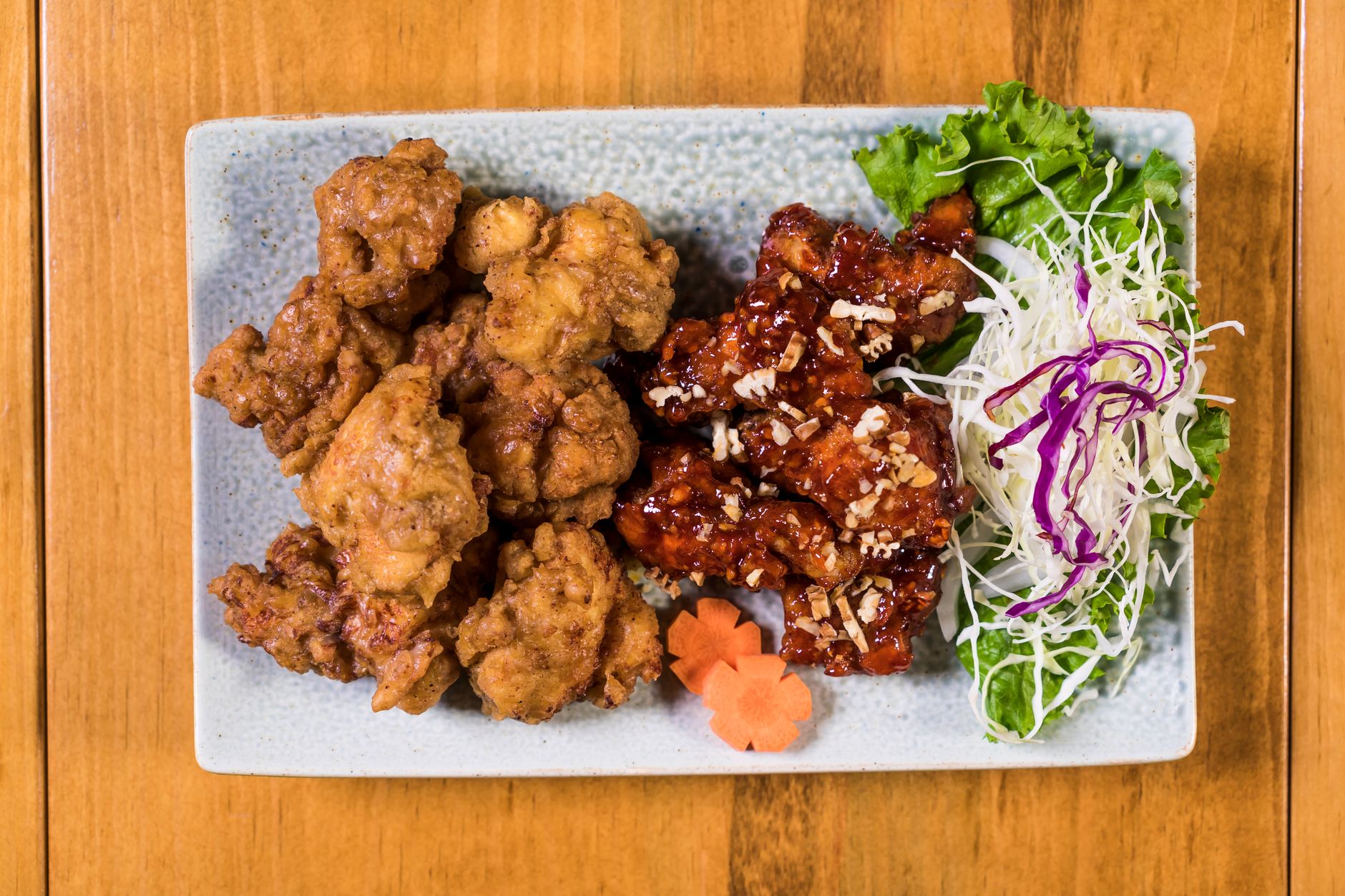
Is Korean Fried Chicken Gluten Free? Allergens, Ingredients, and What to Ask Before You Order
Korean fried chicken is delicious, but its batter, sauces, and cooking environment introduce several common allergens. This guide explains what ingredients to expect, which questions to ask, and how to make a confident decision before your first order.
12 min read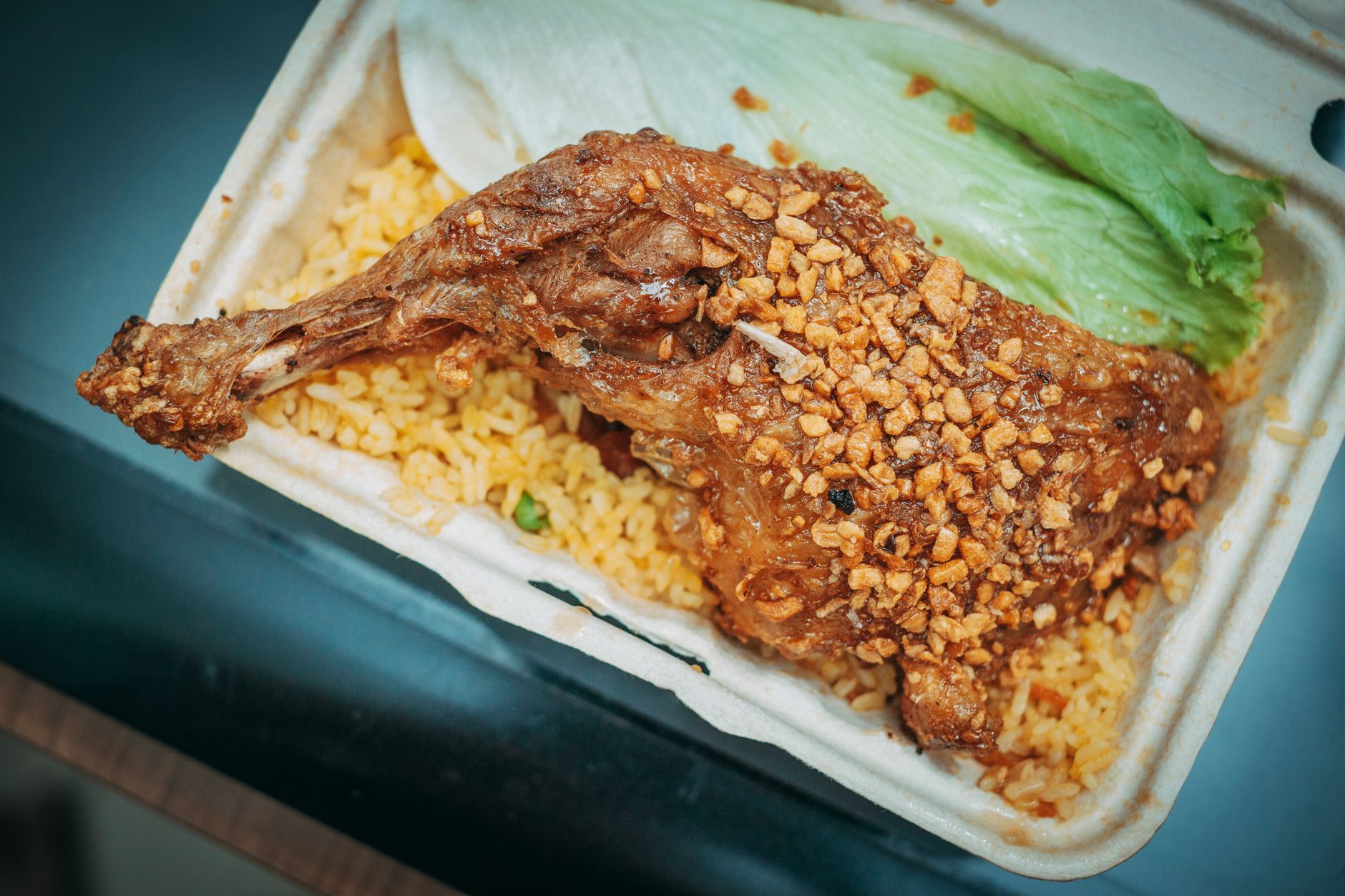
Does Fried Chicken Stay Crispy During Delivery? How 101 Chicken Packs for the Ride
Delivered fried chicken has a reputation for arriving soggy, but the right packaging and timing can change that. This guide explains exactly why crunch dies in transit and what restaurants like 101 Chicken in Fort Lee do differently to keep it alive.
11 min read
10 Best Game Day Party Food Ideas to Order in Fort Lee, NJ
Game day in Fort Lee calls for food that feeds a crowd without the hassle. From crispy Korean fried chicken in multiple heat levels to shareable sides, this guide covers the best party food to order, plus practical tips on quantity, lead time, and packaging for groups of 10 or more.
12 min read