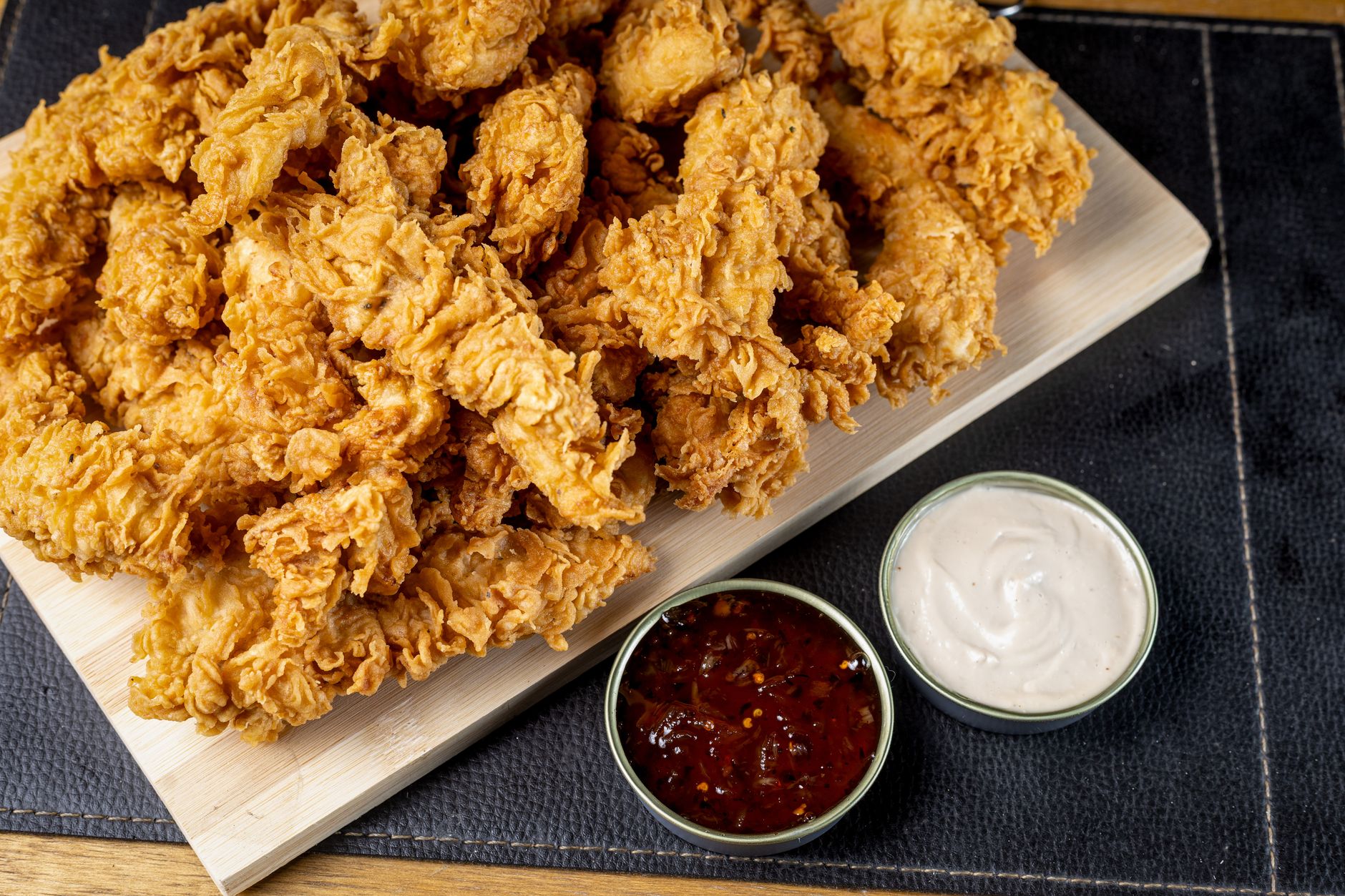
Fried chicken tastes different between visits because oil temperature drifts, fry times vary by cook, and batch sizes change throughout the day. At 101 Chicken in Fort Lee, NJ, a robot-assisted kitchen controls all three variables automatically, so every order comes out with the same crust, moisture, and flavor regardless of when you visit.
Why Does Fried Chicken Taste Inconsistent at Most Restaurants?
The short answer is physics and people. Oil temperature, batch timing, and the human making the call on when to pull the basket all interact in ways that are genuinely hard to standardize in a manual kitchen. If you have ever ordered the same dish twice at the same restaurant and gotten two noticeably different results, you have experienced this firsthand. The variables that matter most are not exotic, they are the basic mechanics of frying, applied by different people at different moments in a shift.
Fried chicken requires oil held at a precise window, typically around 325°F for a proper cook-through, with an internal target of 165°F for safe, juicy chicken thighs (themodernproper.com). The science is unforgiving. When oil sits too cool, chicken absorbs significantly more fat; research on fried foods shows oil uptake at lower temperatures can reach 28% compared to 23% at higher temperatures, with crust thickness and thermal conductivity both dropping sharply at lower heat (medcraveonline.com). That difference is exactly what separates a greasy, limp piece from a clean, crispy one. Quick-service restaurant kitchens run this process dozens of times per shift, and each cycle is a new opportunity for a variable to slip.
What Happens to Oil Temperature During a Busy Dinner Rush?
Dropping cold raw chicken into hot oil immediately pulls heat out of the oil. Recovery time depends entirely on the fryer's power output and the size of the batch. In a manual kitchen, cooks rarely wait for the oil to fully return to its target temperature before loading the next batch. In our experience at 101 Chicken, this pressure to keep pace with orders is exactly why we invested in robot-assisted frying to maintain oil temperature automatically between batches. That is not laziness, it is the reality of running a busy dinner service where tickets are stacking up. The result is a sliding scale: the first batch of the night may fry perfectly, while the third or fourth batch goes in at 20 to 40 degrees below target.
Chicken fried in under-temperature oil absorbs more fat and comes out soft and heavy. Chicken fried in oil that overcompensates and runs too hot browns fast on the outside while the interior stays undercooked. The window between ideal oil temperature frying and food science tells us chicken needs to cook for roughly 10 to 12 minutes at 325°F to reach a safe and juicy result (themodernproper.com). Shorten or extend that window due to temperature drift and the product changes. This is the core technical problem that manual frying cannot fully solve.
How Does Staff Variability Affect What Lands on Your Plate?
Even skilled cooks develop personal habits. Our team has found that removing individual variation from the frying step allows us to focus our staff on what matters most, which is the quality of ingredients and the care we put into every order. One person's "a generous pinch" of seasoning is another person's light dusting. Dredge thickness varies by hand pressure. Resting time before frying changes how much coating adheres. These are micro-decisions made dozens of times per shift, and they compound. Quick-service restaurants nationally see staff turnover rates of 130-150% in 2026, meaning the person who made your chicken last month likely no longer works there (gratuitysolutions.com). At 80% average annual turnover across restaurants broadly (instagram.com), replacing that institutional technique knowledge costs operators roughly $5,864 per hourly employee replaced (instagram.com).
Hand-breading, specifically, creates more variation than machine-applied or pre-portioned coatings. When a person applies breading by hand, the coating weight, evenness, and adhesion differ from piece to piece and shift to shift. No training manual eliminates this entirely because human hands are not identical and fatigue is real. Even a single distraction during service, a rush ticket, a question from a coworker, can alter fry timing by 30 to 60 seconds, which is enough to change crust texture and interior moisture in a meaningful way. The full list of write-ups is on our press page.
How Does a Robot-Assisted Kitchen Fix the Consistency Problem?
Robot-assisted frying removes the judgment calls. That is the operational point. The system does not approximate the right temperature or estimate when the basket should lift. It monitors and maintains oil temperature continuously, not just at the start of each batch, and it lifts the basket at the programmed second. This is not a minor improvement in precision, it eliminates the entire category of human timing error from the frying step. Restaurant robot deployments are growing at 61% year-over-year (servicerobotco.com), and more than 340 restaurant locations nationally were running active robot systems as of early 2026 (servicerobotco.com), which tells you this is not an experiment anymore. The automated cooking systems market was valued at $5.0 billion in 2025 and is projected to reach $34.1 billion by 2034 (servicerobotco.com).
At 101 Chicken on Lemoine Ave in Fort Lee, the robot handles the frying step where human variability does the most damage. Oil temperature regulation is continuous. Fry cycle timing is set per product, not per cook. Staff attention shifts from active cooking decisions to quality checks and service. NJ.com reported on exactly this setup, noting our inventive approach to robot-assisted frying. The machine does not get tired at 10 PM on a Saturday. It does not change habits depending on who's on shift. That is the operational foundation for a consistent product.
What the Robot Controls and What It Does Not
Consistency is the core claim here, and we want to be specific about where automation helps and where human craft still matters. The robot controls the frying step: temperature regulation, immersion timing, and basket lift. What it does not replace is the judgment that goes into sourcing chicken, preparing marinades, and deciding which flavors to offer. Those decisions are ours. The automation is our answer to the most common failure point in fried chicken, the fry itself, and it is why a Fort Lee family ordering at 7 PM on a Friday gets the same product as a solo commuter picking up at 11 PM on a Sunday. We recommend trying us back to back on different days and times to experience this consistency firsthand, because that reliability is the entire point of our kitchen design. Results are consistent. That is the whole point.
Even major chains with highly standardized training programs acknowledge that consistency across kitchens, shifts, and staff is difficult to fully achieve. The industry's own data on turnover rates makes the case. When staff turnover runs at 130-150% in quick-service restaurants (gratuitysolutions.com), no training program fully bridges the technique gap between one employee and the next. Automation is the structural solution. The restaurant automation market is forecast to grow at 17.8% compounded annually between 2026 and 2034 (servicerobotco.com) precisely because operators recognize this problem has an engineering answer.
What Flavor Categories First-Time Visitors Can Expect at 101 Chicken
If you have never tried Korean fried chicken, the first thing to know is that the texture experience is different from what most Americans associate with fried chicken. Korean-style preparation typically uses a thinner, lighter batter compared to Southern-style thick coatings, and double-frying is a common technique that produces an exceptionally crunchy exterior that holds up longer. The key difference is that glazes and sauces are applied after frying, not cooked into the crust. This keeps the coating crispy while delivering full flavor on the surface.
At 101 Chicken, the flavor categories broadly include original, soy-based, and spicy styles. Original is the right starting point for a first visit: it lets the crust quality and the chicken itself speak without distraction. Soy-based flavors add umami depth, drawing on a tradition that is central to Korean fried chicken. Spicy options exist, and intensity can vary, confirm the heat level directly with us at the counter or through our online ordering system before committing. We deliberately avoid publishing heat-level numbers or allergen claims here because those specifics are best verified in real time at the restaurant. What we can tell you is that every flavor option goes through the same robot-controlled fry process, so the crust consistency is the same regardless of which sauce you choose.
How Korean Fried Chicken Differs From American Fast-Food Versions
The structural difference comes down to batter and sequence. American fast-food fried chicken typically uses a thick, heavily seasoned crust that absorbs sauce poorly and softens quickly. Korean fried chicken uses a thinner, starchier coating that crisps more aggressively and holds its texture longer after frying. The double-fry technique, where the chicken is fried once to cook through and again at higher heat to set the crust, is the technical reason the exterior stays crunchy even after sauce is applied. Frying temperature science confirms this: higher, properly maintained temperatures produce a thicker, more heat-conductive crust (medcraveonline.com), which is exactly what a good robot-controlled fry delivers. The result is a lighter, cleaner bite that most first-time customers at our Fort Lee location find immediately different from what they expected.
How Consistent Hours and Online Ordering Support a Reliable Experience
Food quality consistency only matters if you can actually get the food when you want it. We are open seven days a week, with late-night weekend hours that serve Fort Lee's dense commuter and residential community. This matters practically: northern New Jersey runs on irregular schedules, and a restaurant that closes at 9 PM is not useful after a late game, a long commute, or a Friday night out near the Washington Bridge Plaza area. Knowing we will be open when you arrive is a form of reliability that the food itself cannot provide alone.
Online ordering extends that reliability before you even leave the house. Customers can place and customize orders in advance, which removes in-person wait time and reduces the pressure of making decisions at the counter. For pickup and delivery orders, the robot-controlled fry process means the product coming out of the kitchen does not change based on how busy the dining room is. Consider a Saturday night at 11 PM when a Fort Lee commuter orders delivery after a late shift, while a family picks up dine-in at the same moment during peak service. Both receive chicken fried at exactly 325°F with identical timing, so the solo customer gets the same crust quality and juiciness as the family, regardless of kitchen pressure or staff changes from earlier in the evening. A 47% share of restaurant operators nationally anticipated that technology and automation would become more common for addressing operational challenges, according to the National Restaurant Association's 2024 State of the Restaurant Industry report (restaurant.org). We are already there. The combination of online ordering, consistent production, and late-night availability is what makes 101 Chicken a genuinely reliable option in Fort Lee rather than a gamble.
Why Consistent Fried Chicken Matters More Than You Might Think
Food memory is powerful and asymmetric. A single great visit builds expectations. A single disappointing follow-up visit, a greasy batch, a dry interior, a bland crust, can end the relationship permanently. This is not a marketing concern; it is a behavioral reality. For first-time customers weighing whether to try something new, the risk of inconsistency is a real friction point. It is especially true in a market like Fort Lee, where national chains, independent Korean spots, and a range of other restaurants compete for the same dinner decision every night.
Consistency is the foundational reason regulars become regulars. Not price. Not convenience alone. The confidence that the third visit will be as good as the first is what drives someone from occasional customer to weekly habit. At 101 Chicken, the robot kitchen is not a novelty or a press hook, though outlets including NJ.com and ABC7 New York did cover it in 2024. It is an operational decision made specifically to eliminate the most common failure point in fried chicken: the moment a tired cook pulls a basket 45 seconds too early during a Saturday rush. We made that engineering choice so that our Fort Lee customers never have to wonder whether tonight will be a good batch or a bad one. It will be the same batch. Every time.
Oil quality also degrades over a shift in ways that are invisible to the cook. As oil ages, its smoke point drops, free fatty acids accumulate, and the flavor of the oil itself transfers to the food in ways that read as "off" or "stale" even when customers cannot name what is wrong. Consistent temperature control slows that degradation by reducing the number of thermal cycles the oil endures, fewer temperature spikes and drops means slower breakdown. Holding practices add another variable: chicken served immediately is crisper, while time in a warming cabinet allows steam to soften the crust from the inside out. Our process minimizes that hold time by keeping production tight to demand. The science of fried chicken tells us optimal frying temperatures run between 150 and 190°C (sciencefocus.hkust.edu.hk), and staying in that range consistently is what the robot is built to do. NJ.com covered the robot fry station when we opened in Fort Lee.
Frequently Asked Questions
Is 101 Chicken a good choice if I have never tried Korean fried chicken before?
What flavor options are available at 101 Chicken and how do I choose one?
How does the robot kitchen at 101 Chicken actually work?
Does the food taste as good for pickup and delivery as it does in the restaurant?
What are 101 Chicken's hours, and is it really open late on weekends?
How is Korean fried chicken different from American fast-food fried chicken?
Can I customize my order online before I arrive at 101 Chicken?
How does oil temperature affect fried chicken's taste and texture?
What causes frying oil to degrade during a restaurant shift?
How do restaurants standardize breading, seasoning, and marination?
Why can hand-breaded chicken vary more than frozen, pre-breaded chicken?
How do cooking time and holding practices change chicken quality?
Sources & References
- Restaurant Employee Turnover Rate: 2026 | Gratuity Solutions (opens in a new tab)[industry]
- The 2026 Guide to Restaurant Automation Technology | Service Robot Co. (opens in a new tab)[industry]
- Perfectly Crispy Fried Chicken | The Modern Proper (opens in a new tab)[industry]
- Restaurant Turnover Crisis 2026 | Gratuity Solutions Instagram (opens in a new tab)[industry]
- Effect of Frying Temperature on Amount of Oil Uptake of Potato French Fries | MedCrave (opens in a new tab)[industry]
- Make Room for Restaurant Automation | National Restaurant Association (opens in a new tab)[org]
- The Science of Fried Chicken | HKUST Science Focus (opens in a new tab)[edu]
- nj.com (opens in a new tab)[industry]
About the Author
101 chicken
101 Chicken is Fort Lee's premier destination for fresh, expertly prepared chicken dishes, offering convenient dine-in and online ordering seven days a week with extended late-night weekend service.
Learn more at www.101chicken.com → (opens in a new tab)Related Posts
How to Open a Restaurant in New Jersey: Licenses, Permits, and Realistic Timelines
Opening a restaurant in New Jersey requires navigating municipal zoning, state health permits, tax registration, and more — typically a 6-to-12-month process before opening day. This guide breaks down every required license, realistic cost benchmarks, and what experienced operators do to cut through the timeline. 101 Chicken's Fort Lee location offers a working example of how modern kitchen infrastructure affects the equation.
12 min read
Korean Fried Chicken Chain vs. Independent: Which Should You Choose in Bergen County?
Trying Korean fried chicken for the first time and not sure whether to visit a chain or an independent spot in Bergen County? This guide breaks down the real differences in quality, consistency, hours, and overall experience so you can order with confidence.
11 min read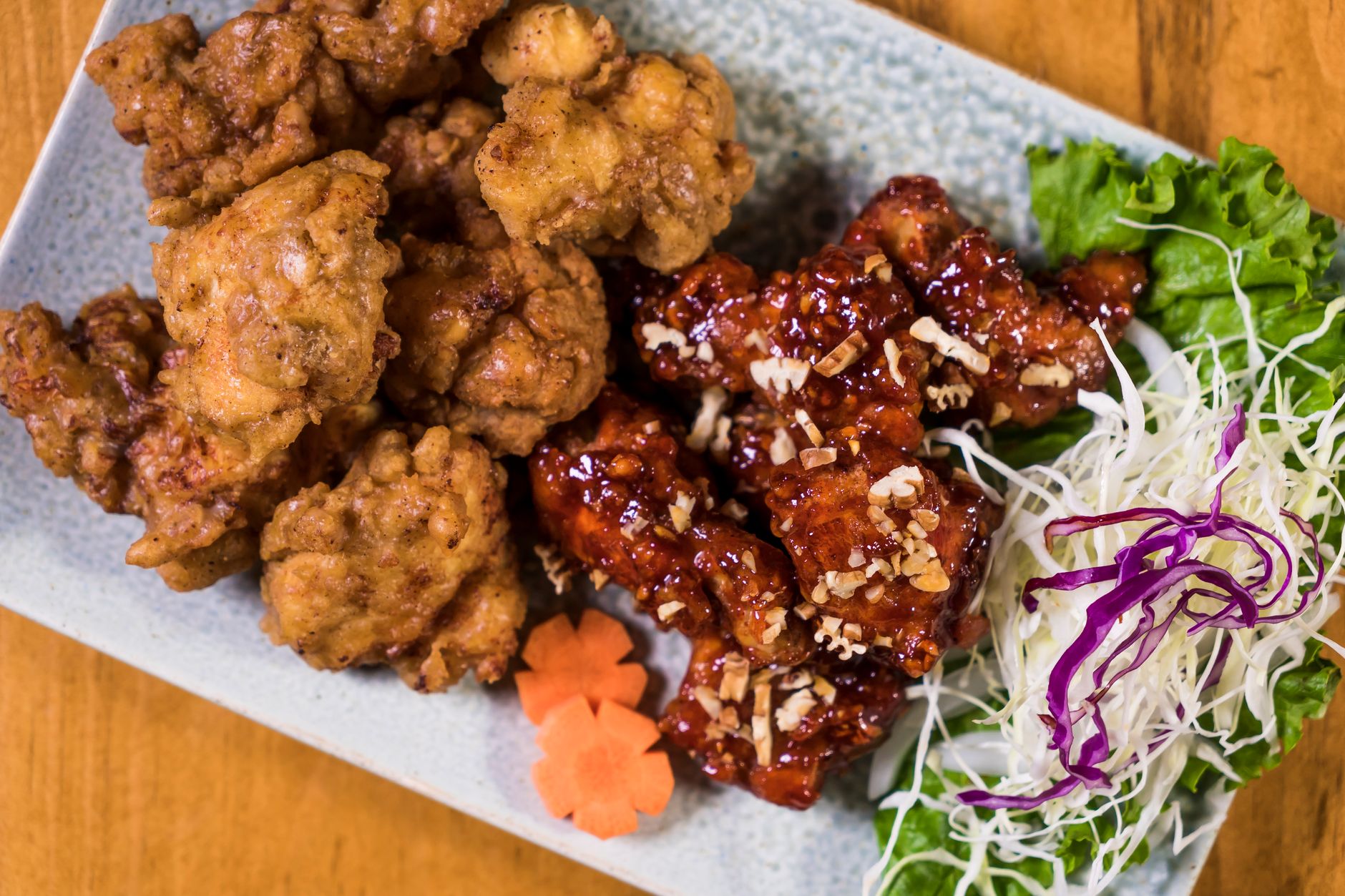
10 Sides That Actually Go With Korean Fried Chicken
Korean fried chicken is boldly seasoned, satisfyingly crispy, and unlike anything from a standard fast-food menu. The right sides make it a complete meal. This guide covers 10 sides that genuinely complement every style of Korean fried chicken, whether you're ordering soy-glazed, spicy, or original.
15 min read