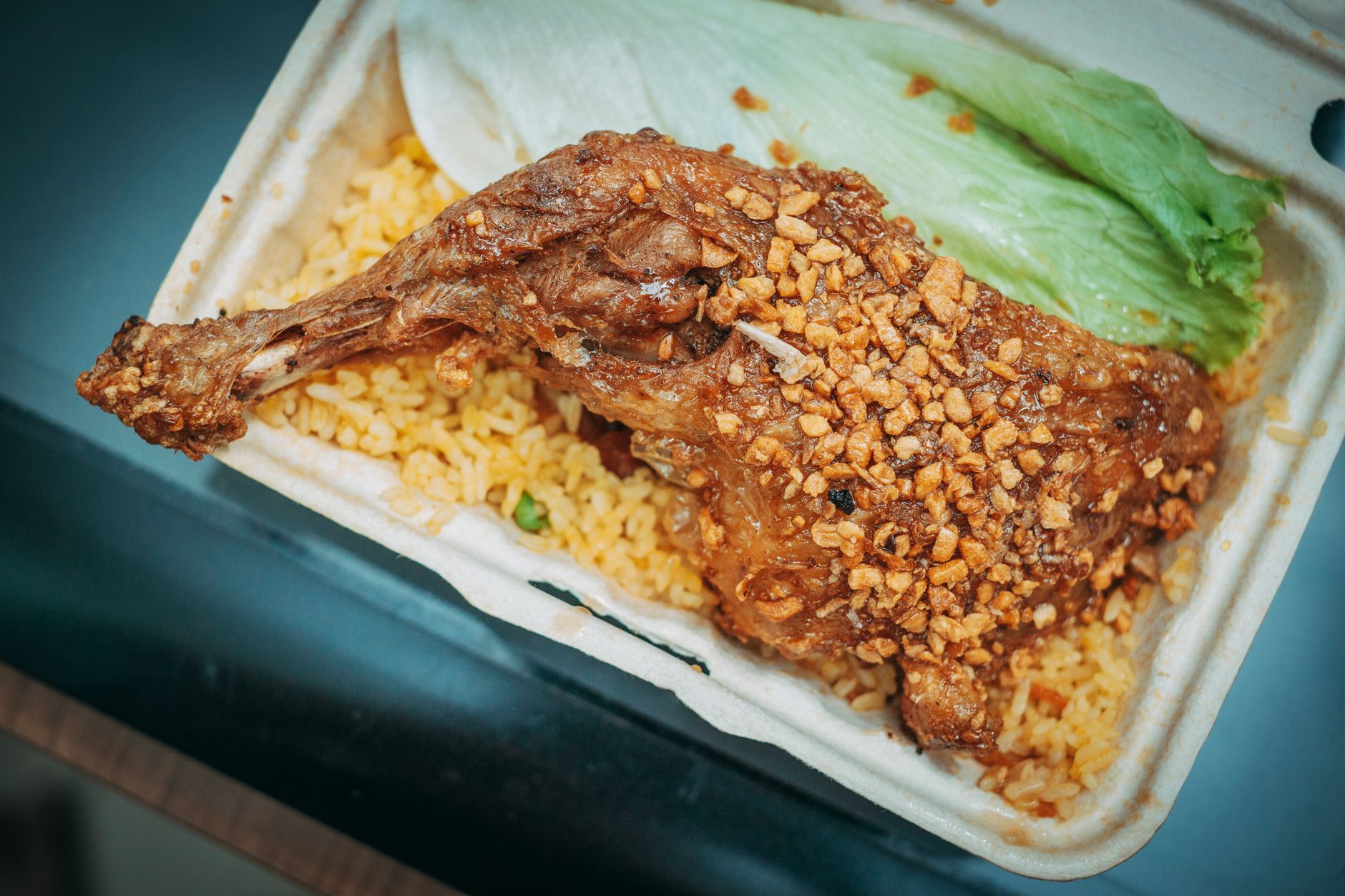
Fried chicken rarely arrives as crispy as it left the fryer, but it does not have to arrive soggy. Steam trapped inside sealed containers is the main culprit. Restaurants that use vented boxes, time their fry-to-bag window carefully, and keep sauces separate can deliver chicken that is still satisfyingly crunchy within a 15-to-20-minute radius.
Why Does Fried Chicken Lose Its Crunch in Transit?
The short answer is steam. Chicken thighs and breasts hold significant internal moisture even after a proper fry at 150-190°C (sciencefocus.hkust.edu.hk). Once the bird is boxed, that moisture converts to vapor, which has nowhere to go in a sealed container. It condenses directly onto the crust, saturating the outer starch layer and turning crunch into mush. The batter's starch structure also begins to retrograde within minutes of leaving the fryer, a process that accelerates sharply when relative humidity inside the box climbs. Delivery bags designed to retain heat compound the problem: they are essentially sealed chambers that recirculate warm, wet air. The result is a microclimate that is almost perfectly engineered to destroy fried food texture. Drive time matters too. Crunch loss tracks roughly with delivery duration, which is why sub-20-minute windows produce a noticeably different result than 40-minute ones.
The Steam Trap Problem Explained
Polystyrene clamshells are the worst offenders here. They form a near-airtight seal that locks steam against the crust continuously from the moment the box closes. Even a 10-minute ride can raise in-box humidity enough to noticeably soften the outer crust. The dry mix in a standard fried chicken batter contains 80% to 90% flour and starch (thefriedchickenblog.blogspot.com), and starch gelatinizes readily when hit with moisture and residual heat together. That combination converts the crunchy shell into something closer to a wet cracker. Thick coatings trap even more steam internally because the outer crust seals before interior moisture can escape. Thinner, more even coatings actually handle this better because there is less material to absorb and hold condensation.
How Delivery Distance Multiplies the Damage
Distance is not just a customer convenience issue. It is a crunch preservation variable. Every additional few minutes of transit allows another cycle of steam generation and condensation inside the box. Restaurants located close to dense residential neighborhoods have a structural advantage that no packaging innovation can fully replace. Fort Lee, NJ, works well in this regard. The compact corridor along Lemoine Ave and surrounding streets means many local deliveries reach customers quickly, before steam has had enough time to fully compromise the crust. That geographic reality is one reason Korean fried chicken delivery can perform well in Bergen County compared to restaurants delivering across longer suburban distances.
What Packaging Techniques Actually Preserve Crunch?
Packaging is the variable restaurants can control most directly. Vented cardboard boxes are the clear winner over sealed clamshells because they release steam continuously rather than trapping it. The trade-off is a modest drop in surface temperature, but crunchy-and-warm is almost universally preferred over soft-and-hot. Placing chicken on a corrugated tray or wire rack insert lifts it off the box floor, so pooling condensation cannot soak the bottom crust from below. Sauces must always ship in separate containers. Wet sauce applied before boxing accelerates softening faster than almost any other single variable. Double-layered paper lining adds another layer of moisture absorption without chilling the chicken as fast as bare cardboard would. The global takeaway container market reflects a growing awareness of these needs: food and beverage end-uses represent 37.1% of takeaway container sector demand in 2026 (futuremarketinsights.com), driven partly by delivery logistics and grease-resistant bio-coatings that handle exactly this moisture problem.
Vented vs. Sealed Containers: Which Wins?
The comparison is not even close in practice. Vented containers release steam continuously, which prevents the humidity spike that begins softening crust within the first five minutes of boxing. Sealed clamshells may keep the chicken warmer to the touch, but that retained heat accelerates the condensation cycle and delivers a hotter but significantly soggier product. Rigid sealed containers are projected to hold 54.6% of packaging format demand in 2026 (futuremarketinsights.com), which tells you most of the industry is still defaulting to sealed formats despite their texture drawbacks. Korean fried chicken shops have broadly moved toward vented packaging paired with double-frying, treating the packaging decision as part of the recipe rather than an afterthought. The specific implementation details matter: vent placement should be on the lid sides rather than the top only, so steam exits laterally and does not rain back down onto the crust.
The Double-Fry Method and Its Role in Delivery Crunch
Double-frying is the single most effective technique for building a crust that can survive delivery. The first fry cooks the meat through. The second fry, at higher heat and shorter duration, drives residual moisture out of the coating itself, producing a denser and drier shell. That drier shell reabsorbs steam more slowly than a single-fried crust does, buying meaningful extra minutes of crunch retention during transit. Korean fried chicken, including what we serve at 101 Chicken, uses this method as a baseline. The structural advantage over single-fry American-style chicken in a delivery scenario is real, not just marketing. A thinner, more even coating also performs better in transit than thick, heavily battered crusts, because there is simply less starchy material to act as a moisture sponge. At 101 Chicken, this is not accidental. Industry data suggests the chicken still has snap when they open the box at home. At 101 Chicken, we've engineered our packaging and fry timing to work together as a system, which is why customers consistently tell us their delivery orders arrive crispy.
How 101 Chicken in Fort Lee Handles Delivery Crunch
At 101 Chicken on Lemoine Ave in Fort Lee, NJ, we think about delivery crunch as an engineering problem, not just a cooking problem. Our robot-assisted kitchen removes the human variability that causes the most common delivery crunch failure: uneven fry times. When one batch runs long and another runs short, chicken sits in boxes at different stages of crust formation, which produces wildly inconsistent delivery results. Automated frying assistance keeps every order exiting the fryer at the same degree of doneness and crust dryness. AI-powered robotic cooking systems can reduce food preparation time by up to 50% (datamintelligence.com), and robotic systems have demonstrated up to a 25% improvement in cooking consistency (technavio.com). That consistency matters for delivery because the fry-to-bag window is the single most important crunch variable we can control. NJ.com covered our robot kitchen with the headline "A robot cooks your fried chicken at this inventive new NJ restaurant," and ABC7 New York ran a segment on it in 2024. The coverage captures something real about what makes the setup different. Consistent batch timing means chicken does not sit in a box waiting for other items to finish cooking, which is where crunch dies in a conventional kitchen on a busy night. NJ.com covered the robot fry station when we opened in Fort Lee.
Why the Robot Kitchen Matters for Consistency
Consider a busy Saturday night in Fort Lee: traditional kitchens under pressure tend to rush some batches and delay others, producing uneven results that delivery customers absorb entirely. Our robot-assisted system runs on the same fry profile regardless of how crowded the dining room is or how many online orders are stacked. For delivery customers placing orders through our online platform late on a weekend, this consistency is especially valuable. In our experience, the biggest crunch preservation advantage is eliminating the kitchen wait time where chicken sits boxed while slower batches finish, and our robot-assisted system solves exactly that problem. The robot kitchen market is growing at a CAGR of 24.6% from 2025 to 2030 (technavio.com), and restaurant robot deployments grew 61% year-over-year as of 2026 (roboticscenter.ai), which signals that the industry is converging on exactly this kind of automation for quality control reasons. For our Fort Lee customers, the practical outcome is that a delivery order placed at 10 p.m. on a Friday gets the same crust quality as one placed at 6 p.m. on a Tuesday. That reliability is something we are genuinely proud of. The full list of write-ups is on our press page.
Other Fort Lee and Bergen County Spots Worth Knowing for Fried Chicken
Fort Lee's dining corridor and large Korean-American community have produced a legitimate cluster of fried chicken options. We think customers deserve a fair picture of what is available locally, so they can choose based on actual style preferences rather than just proximity. The Korean fried chicken restaurant market was valued at USD 9.73 billion globally in 2025 (growthmarketreports.com), with a projected CAGR of 5.1% through 2034, which reflects just how seriously the format has taken hold worldwide. Bergen County is a good example of that growth playing out at the neighborhood level. Pickup is always the crunch-safest choice at any of these spots. Delivery performance varies by distance, packaging decisions, and how busy the kitchen is at the time of your order.
A Practical Comparison of Local Fried Chicken Options
Here is a straightforward comparison of what is available in the Fort Lee and Bergen County area for fried chicken.
| Restaurant | Style | Kitchen Approach | Delivery | Late-Night |
|---|---|---|---|---|
| 101 Chicken (Fort Lee, Lemoine Ave) | Korean double-fried | Robot-assisted, consistent fry times | Yes, online ordering | Yes, weekends |
| Bonchon (multiple Bergen County locations) | Korean, soy-garlic and spicy glaze | Standard kitchen | Yes, major apps | Varies by location |
| Pelicana Chicken (Fort Lee) | Korean franchise, proprietary coating | Standard kitchen | Yes | Varies |
| Kyochon Chicken (Fort Lee) | Korean, thinner crispier crust | Standard kitchen | Yes | Varies |
| Popeyes (Route 4, Bergen County) | American Southern-style | Standard kitchen | Yes, major apps | Some locations |
Bonchon has strong name recognition and consistent glaze options across its Bergen County locations. Pelicana has a loyal following among the local Korean-American community for its distinct coating style. Kyochon is well-regarded for its thinner, crispier crust profile, which is worth noting for customers who prioritize snap over thickness. For purely American-style fried chicken, Popeyes along Route 4 in Bergen County is the most accessible option. Each of these places has its strengths. We put 101 Chicken at the top because we genuinely believe our robot-assisted kitchen and double-fry method give us a structural edge for delivery crunch specifically, not just because it is our restaurant.
Tips for Keeping Delivery Fried Chicken Crispy Once It Arrives
Even the best packaging and shortest delivery radius cannot fully replicate eating fried chicken straight from the fryer. But there are reliable ways to recover most of the crunch after delivery. The most important step costs nothing: open the box immediately when it arrives. Letting steam continue to condense on the crust for even an additional five minutes after arrival makes a measurable difference. Set the chicken on a wire rack or even a plate with paper towels while you prepare to reheat. Never pile pieces on top of each other, as that traps steam between them and softens the contact points rapidly. These small habits extend how long the crust holds without any heat at all.
The Oven and Air Fryer Rescue Method
An air fryer is the fastest and most effective reheat tool for delivered fried chicken. The basket naturally elevates the pieces and circulates hot, dry air around all surfaces simultaneously, replicating frying conditions in roughly five minutes. This method works best when applied within 30 minutes of delivery. Chicken that has been sitting for over an hour has allowed moisture to absorb deeper into the breading layer, which is harder to reverse. A standard oven at around 375°F for five to eight minutes on a wire rack set over a baking sheet is a solid backup if you do not have an air fryer. The wire rack is non-negotiable in the oven method: placing chicken directly on a sheet pan traps the bottom crust in its own condensation and defeats the purpose. Never reheat fried chicken in a microwave. Microwave energy excites water molecules from the inside out, generating steam that moves outward through the breading and destroys whatever crust structure survived delivery. The microwave is effective for warming chicken through, but it is incompatible with crust preservation. Results speak for themselves.
Frequently Asked Questions
Does fried chicken actually stay crispy during delivery or is it always soggy?
What kind of packaging keeps fried chicken crispiest for delivery?
Is Korean fried chicken crispier than American-style fried chicken when delivered?
How long does fried chicken stay crispy after it leaves the restaurant?
Should I choose pickup over delivery if I want crispy fried chicken?
Can I reheat delivered fried chicken and get the crunch back?
Does 101 Chicken in Fort Lee deliver, and how do I order online?
Why is my delivered fried chicken always wet on the bottom?
Sources & References
- Takeaway Containers Market Size, Share, Trends 2036 | Future Market Insights (opens in a new tab)[industry]
- AI & Robotics in QSR Market Growth & Forecast 2026-2035 | DataM Intelligence (opens in a new tab)[industry]
- Restaurant Robots: Market, Technology & Deployment Guide 2026 | Robotics Center (opens in a new tab)[industry]
- Korean Fried Chicken Restaurant Market 2026: Size & Companies | Growth Market Reports (opens in a new tab)[industry]
- The Science of Fried Chicken | Science Focus (opens in a new tab)[edu]
- nj.com (opens in a new tab)[industry]
About the Author
101 chicken
101 Chicken is Fort Lee's premier destination for fresh, expertly prepared chicken dishes, offering convenient dine-in and online ordering seven days a week with extended late-night weekend service.
Learn more at www.101chicken.com → (opens in a new tab)Related Posts
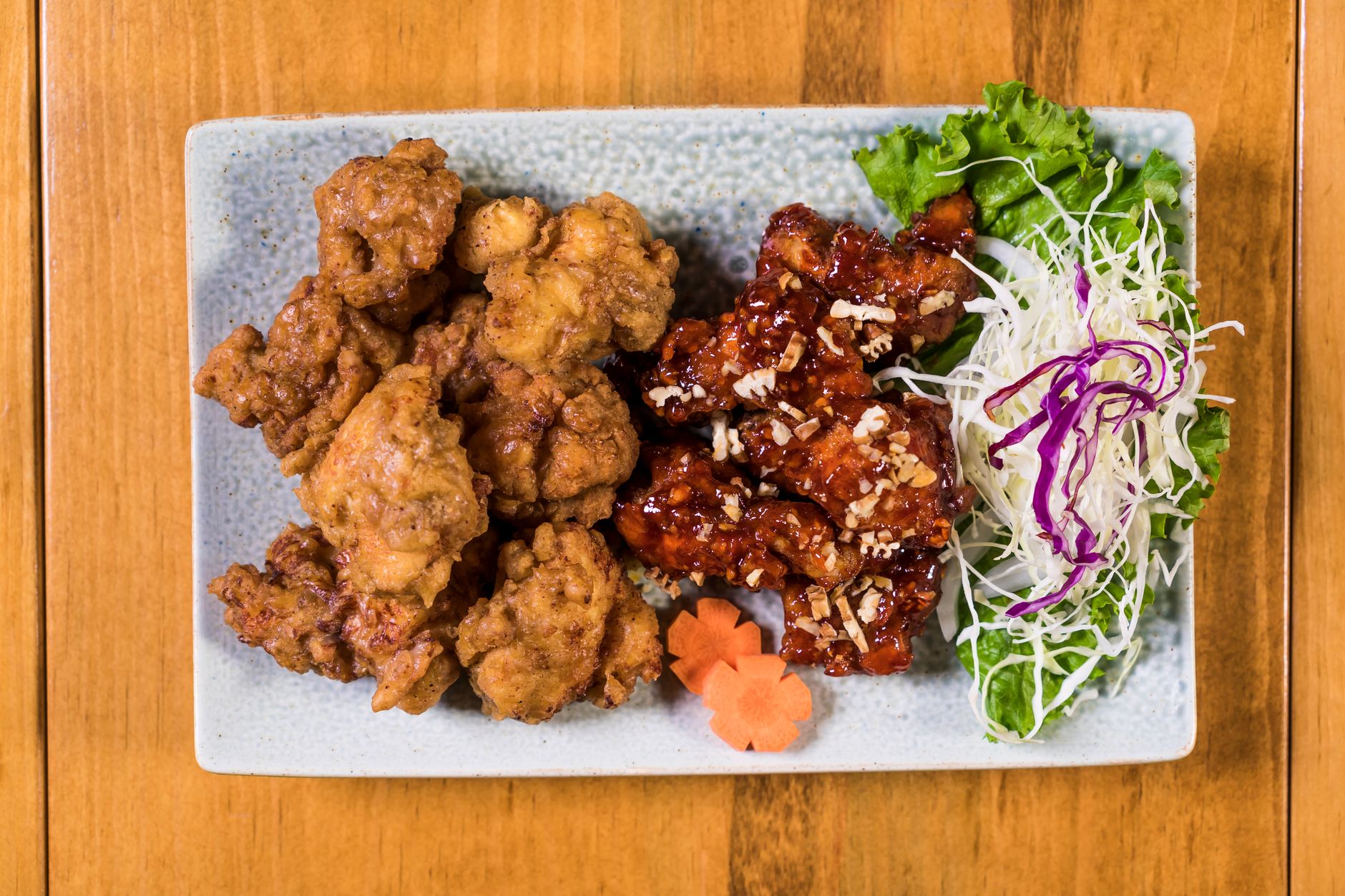
Is Korean Fried Chicken Gluten Free? Allergens, Ingredients, and What to Ask Before You Order
Korean fried chicken is delicious, but its batter, sauces, and cooking environment introduce several common allergens. This guide explains what ingredients to expect, which questions to ask, and how to make a confident decision before your first order.
12 min read
10 Best Game Day Party Food Ideas to Order in Fort Lee, NJ
Game day in Fort Lee calls for food that feeds a crowd without the hassle. From crispy Korean fried chicken in multiple heat levels to shareable sides, this guide covers the best party food to order, plus practical tips on quantity, lead time, and packaging for groups of 10 or more.
12 min read
What It Costs to Open a Korean Fried Chicken Franchise: A Complete Investment Breakdown
Opening a Korean fried chicken franchise involves startup costs that range widely depending on location, format, and operational model. This guide breaks down every major cost category, from initial franchise fees and buildout to equipment, licensing, and ongoing labor, using real industry benchmarks to help prospective investors make an informed decision.
14 min read